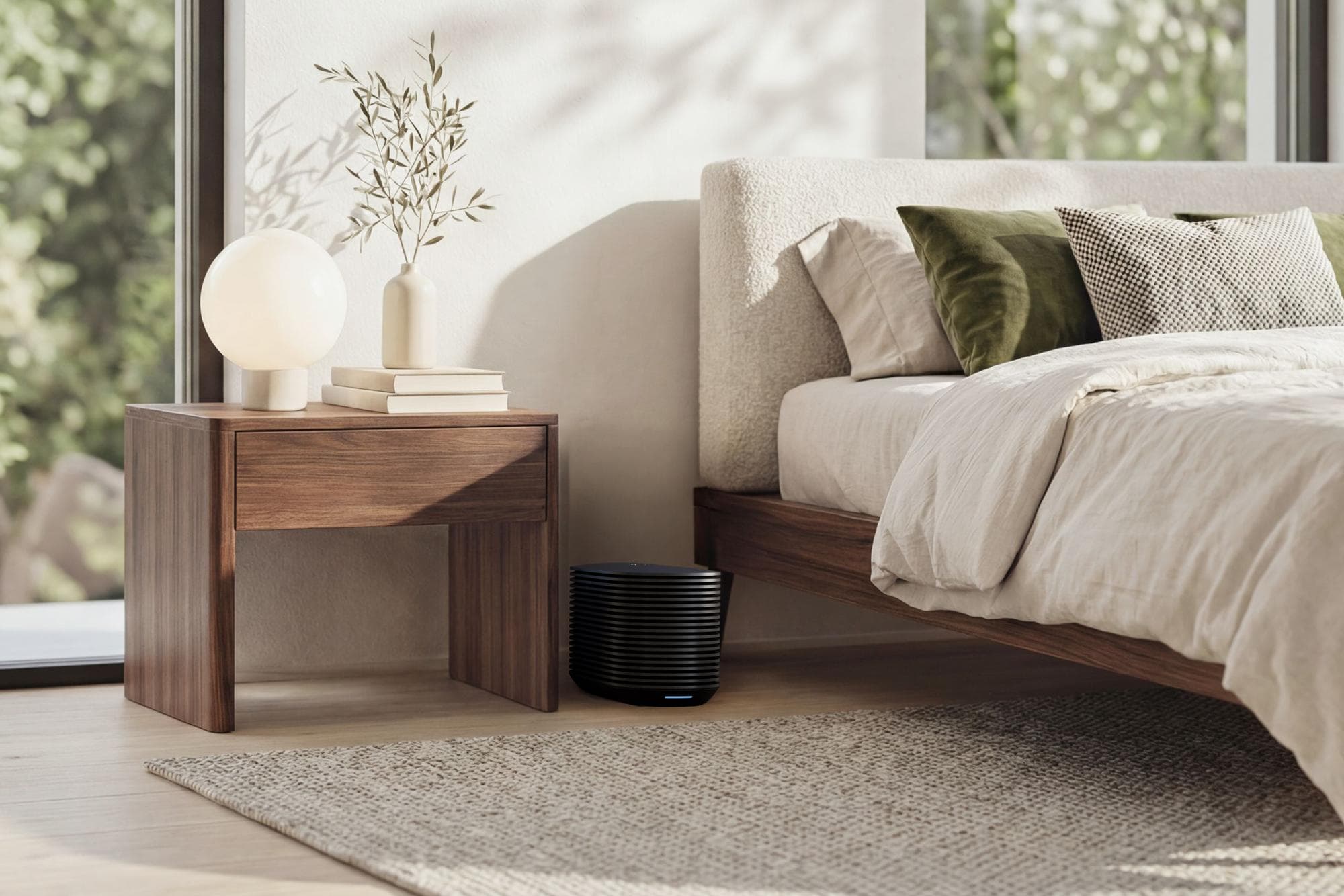
Eight Sleep has launched Pod 6, the sixth generation of its temperature-controlled sleep system. The obvious changes are physical: a smaller Hub, new Solo sizes, and a lower starting price. The more interesting change is buried inside the Cover.
Pod 6 increases its biometric sensor count from two to 18. Eight Sleep says the denser sensor array gives the system enough spatial resolution to separate signals from two people sleeping close together and distinguish a sleeper from a child or pet on the bed. Each side of a standard Pod also continues to run its own temperature and tracking independently.
That makes Pod 6 a useful case study in a problem the broader responsive home still has not solved well: which occupant is producing the signal, and which part of the environment should respond?
The bed is becoming a bounded responsive environment
Eight Sleep already uses biometric and environmental data to alter a sleeper’s thermal microclimate through Autopilot. With Pod 6, the company is trying to make that loop more precise when more than one body occupies the same surface.
That is materially different from whole-room control.
A bed has a defined geometry. The system knows which side belongs to which sleeper, and the thermal output is physically localized. A bedroom HVAC system, lighting scene, shade position or sound system has a much harder job when two occupants want different conditions.
Compound recently covered MIT’s closed-loop pink-noise experiment, where sound was timed to the sleeping brain. Pod 6 points at the commercial side of the same larger question: how narrowly can an environment sense a person and respond without affecting everyone else in the room?
More sensors do not automatically mean better outcomes
Eight Sleep says the new Cover’s 18 sensors improve biometric accuracy and that the redesigned thermal system adjusts temperature faster than the previous generation. Those are company-reported claims. We have not identified independent Pod 6 testing that verifies the new model’s sensor accuracy, thermal-response improvement, or sleep outcomes.
That distinction matters. More spatial resolution is technically interesting even before there is evidence that it improves sleep.
The company also says it is pursuing U.S. FDA clearance as part of a broader move toward medical-device status. Pod 6 should not be treated as an FDA-cleared medical device based on the current launch materials.
The subscription is part of the infrastructure
Pod 6 Solo starts at $1,999 and standard full-bed versions start at $2,699. Eight Sleep’s launch materials list Autopilot plans from $199 to $399 per year. Its support documentation says an Autopilot plan is required for the first 12 months of ownership.
For a product that increasingly behaves like environmental infrastructure, that dependency is not a footnote. The intelligence, automated adjustments, health reporting and portions of the warranty sit inside an ongoing software relationship.
The responsive bedroom may arrive before the responsive house because a bed gives the system a smaller problem to solve: a known surface, a known occupant zone and a controllable microclimate.
Pod 6 is another step toward that model. It is not yet proof that the room itself knows what each person needs.