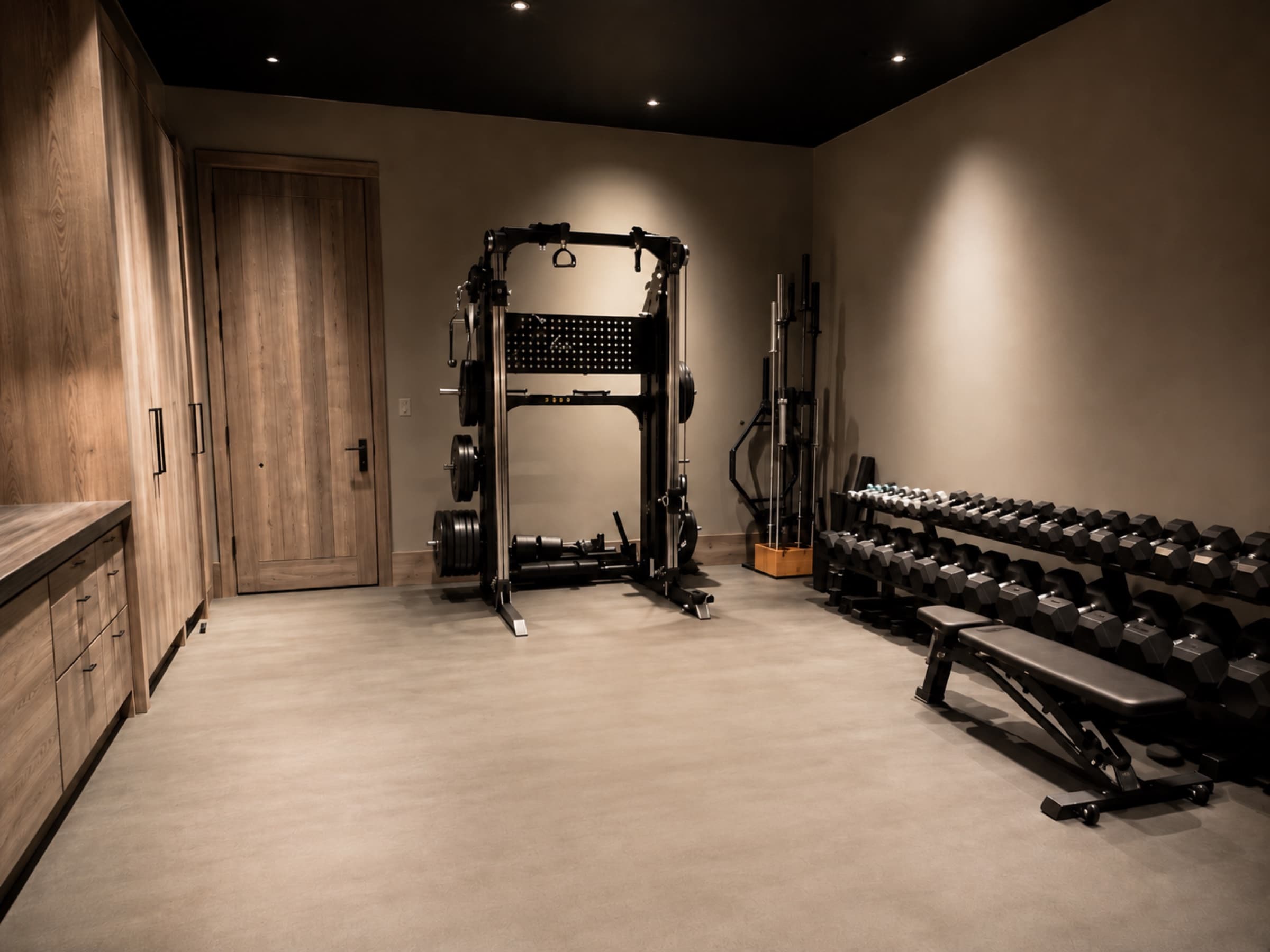
There's a home gym belonging to Mark Zuckerberg circulating in fragments — a short reel of training clips, a piece of an equipment list, no formal tour.
It's not entirely clear which of his properties it lives in. Could be the Palo Alto compound, could be the Lake Tahoe estate, could be Koolau Ranch in Kauai. The aesthetic — rustic wood paneling, weathered industrial-framed doors, polished concrete floor — leans away from a tech-CEO Silicon Valley basement and toward something more retreat-coded.
What's clear is the kit, and the kit is the story. Zuckerberg's public fitness pivot over the last several years has been one of the more visible body transformations in Big Tech — competitive jiu-jitsu, MMA training, posted lifting numbers, a willingness to publicly nerd out about training programs. The gym matches the trajectory. Almost nothing in it is mainstream. Almost everything in it is best-in-class for what it does.
Here's what we know.
The Lifting Floor
The room reads as a single working space split across two zones — a polished-concrete lifting floor and an adjacent wood-paneled cardio area — though it's unclear from the clips whether they're separate rooms or one continuous build.
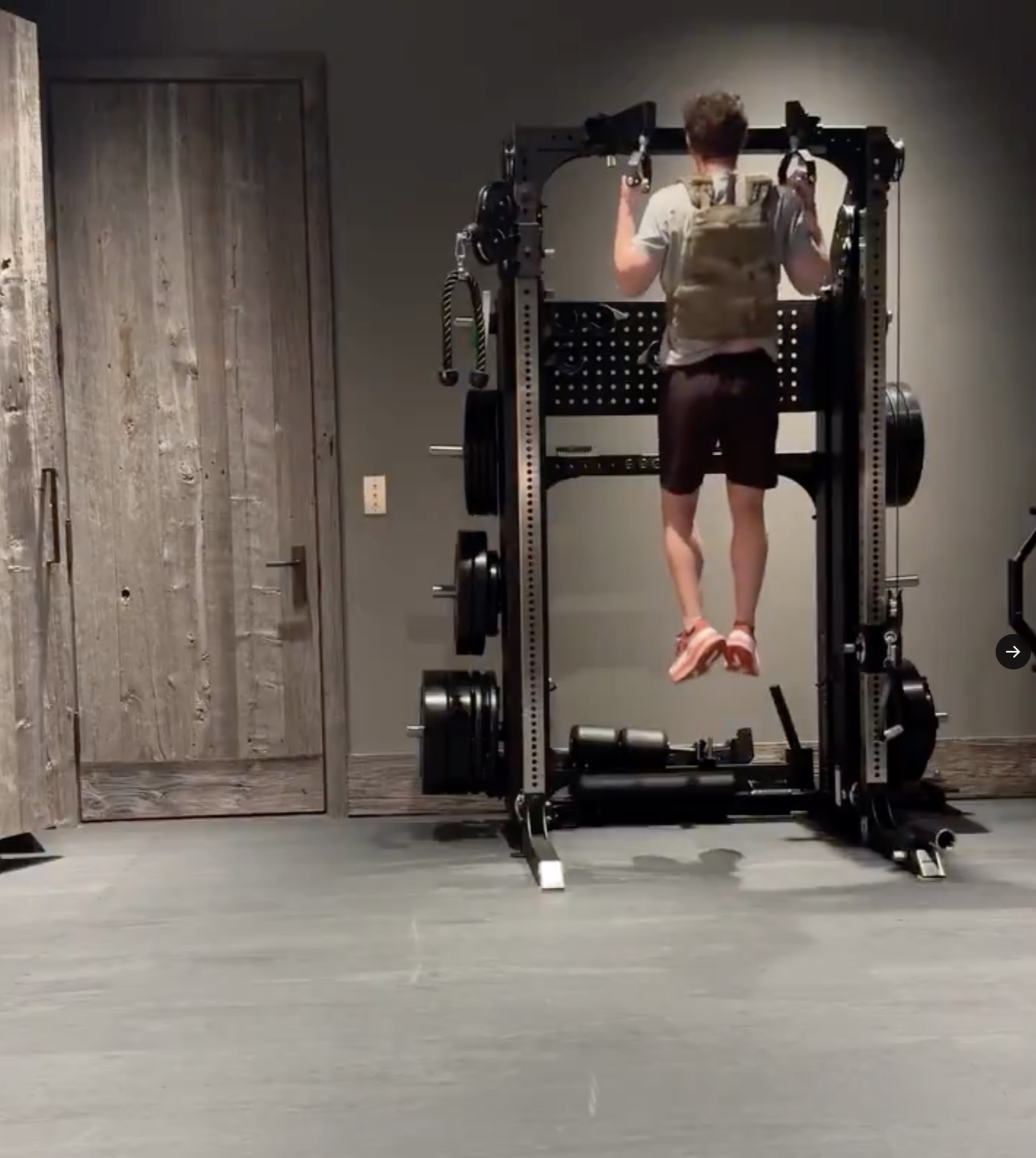
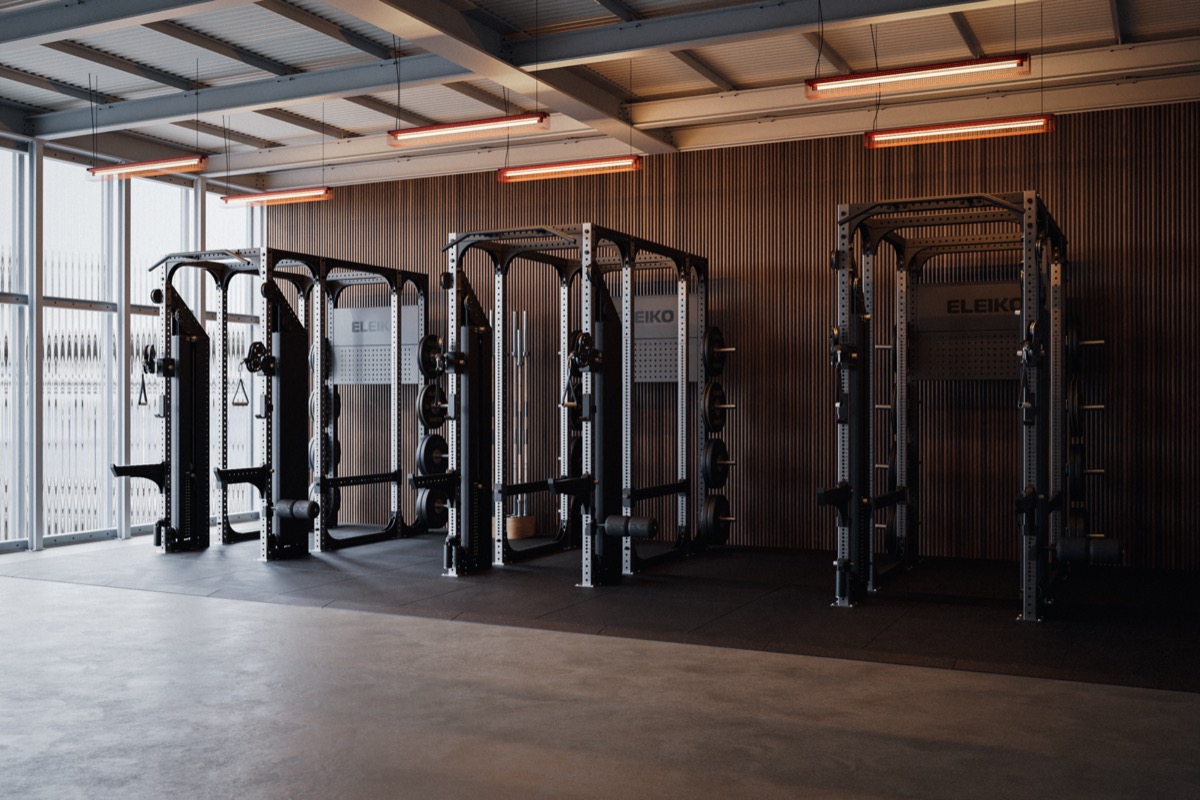
The lifting floor is built around an Eleiko Prestera All-In-One Rack. Eleiko is the Swedish brand that supplies most of the world's elite Olympic weightlifting federations, and the Prestera is their flagship integrated rig — pull-up bars, plate storage built into the uprights, a pegboard accessory panel, and a built-in cable system on each side. The detail that tells you the training isn't casual: this is a piece of equipment that costs more than a new car and is overwhelmingly bought by national programs and serious commercial gyms, not hobbyists.
Loaded onto the rack: a Kabuki Strength Transformer Bar. A specialty barbell from Chris Duffin's lab, and one of the more cult-loved pieces of strength equipment in the world. Adjustable arms let you shift between traditional and safety-squat-bar positioning, changing the leverage profile mid-set. The kind of bar that signals someone training with intent — Duffin's stuff doesn't get bought by accident.
Along the back wall runs a full hex-head dumbbell rack. Hex heads — rather than round — keep the bells from rolling and survive being dropped, which is what you want in a working space. A small detail that compounds across years of use.
Then the genuinely unusual one: a Functional Patterns Functional Trainer. Functional Patterns is the controversial biomechanics methodology founded by Naudi Aguilar, focused on rotational and asymmetric loading rather than traditional gym movements, and the brand makes a proprietary cable trainer built for those patterns.
It's not equipment that ends up in a home gym by accident. Whoever spec'd this gym was reading specific training literature.
Prestera All-In-One Rack
Eleiko
·By quoteEleiko's flagship integrated training station. A double-upright frame with built-in plate storage, an integrated lat pulldown and low row, dual selectorized cable stacks, an accessory pegboard, multi-grip pull-up bar, and J-hooks for free-weight work. The same Swedish manufacturing standard that supplies most of the world's elite Olympic weightlifting federations, packaged into a single home-gym footprint. The piece signals serious training before a single plate is loaded — Eleiko Prestera is what national programs and high-end commercial floors specify when budget is not the constraint. Sold as a configure-to-order modular system, priced by quote.
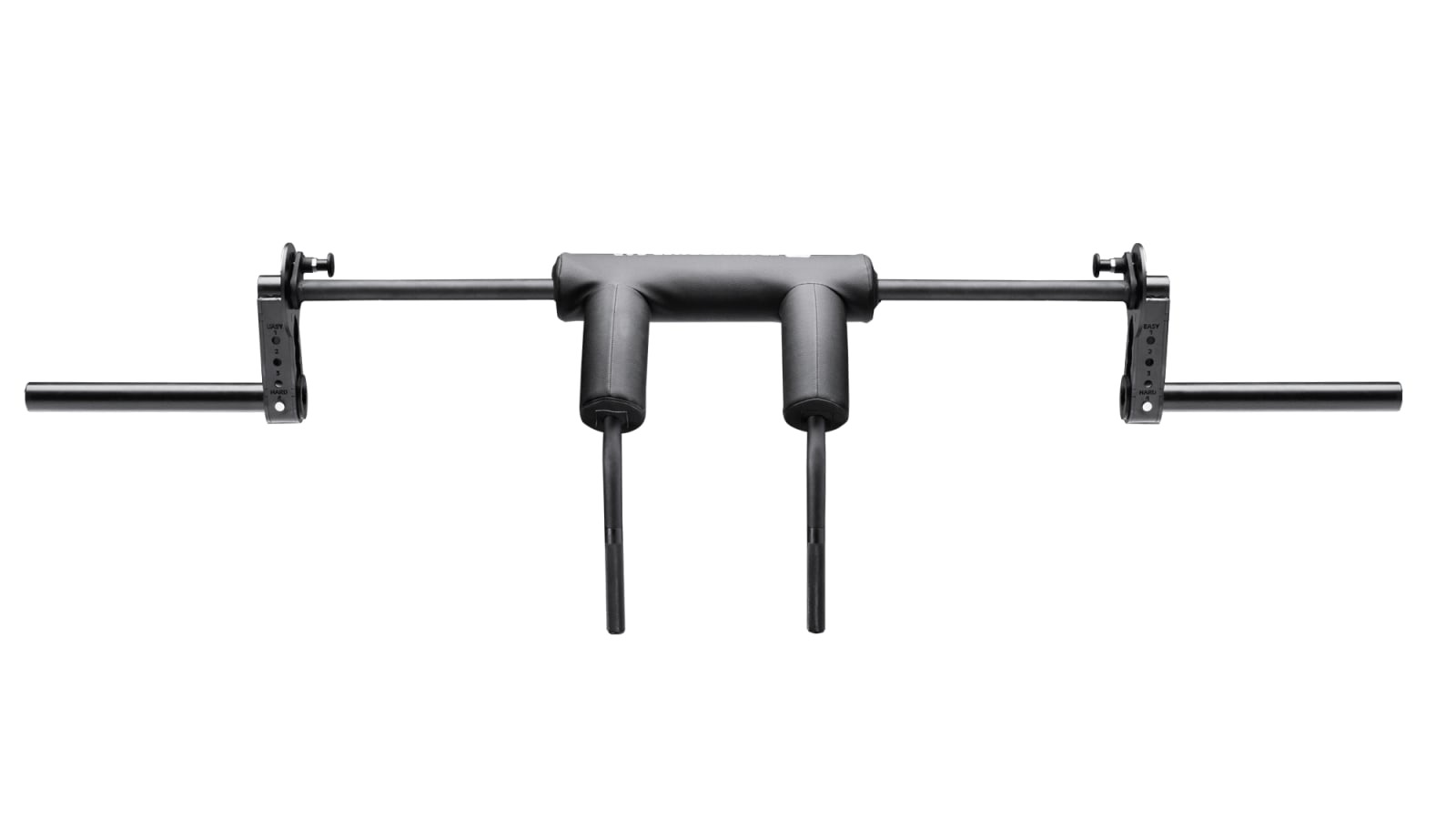
Transformer Bar
Kabuki Strength
·$795A specialty barbell from Chris Duffin's Kabuki Strength lab with adjustable cambered arms that change the leverage profile mid-set. Functions as a traditional bar, a high-bar, a safety squat bar, and several other geometries depending on how the arms are clocked. Used by serious powerlifters, S&C coaches, and rehab settings to accommodate shoulder mobility limitations and target specific positions of the squat without re-racking. One of the more cult-loved pieces of strength equipment in the world — Duffin's stuff doesn't get bought by accident.
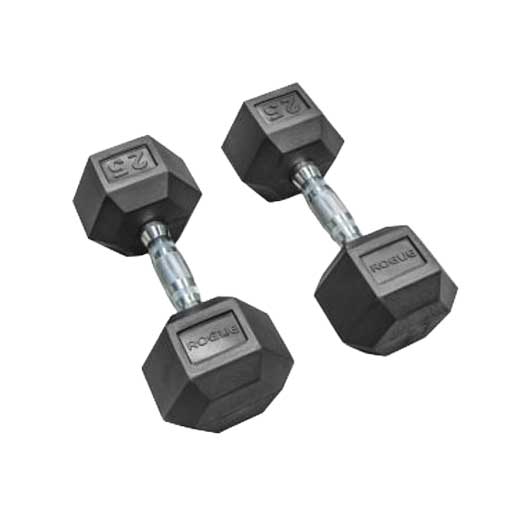
Rogue Rubber Hex Dumbbells
Rogue Fitness
·From $25/pairThe practical dumbbell workhorse for home gyms: rubber-encased hex heads, chrome ergonomic handles, 2.5-125 lb pairs, and enough durability for daily accessory work without the cost of a full urethane rack. Best for building a useful fixed dumbbell range around the weights you actually train.
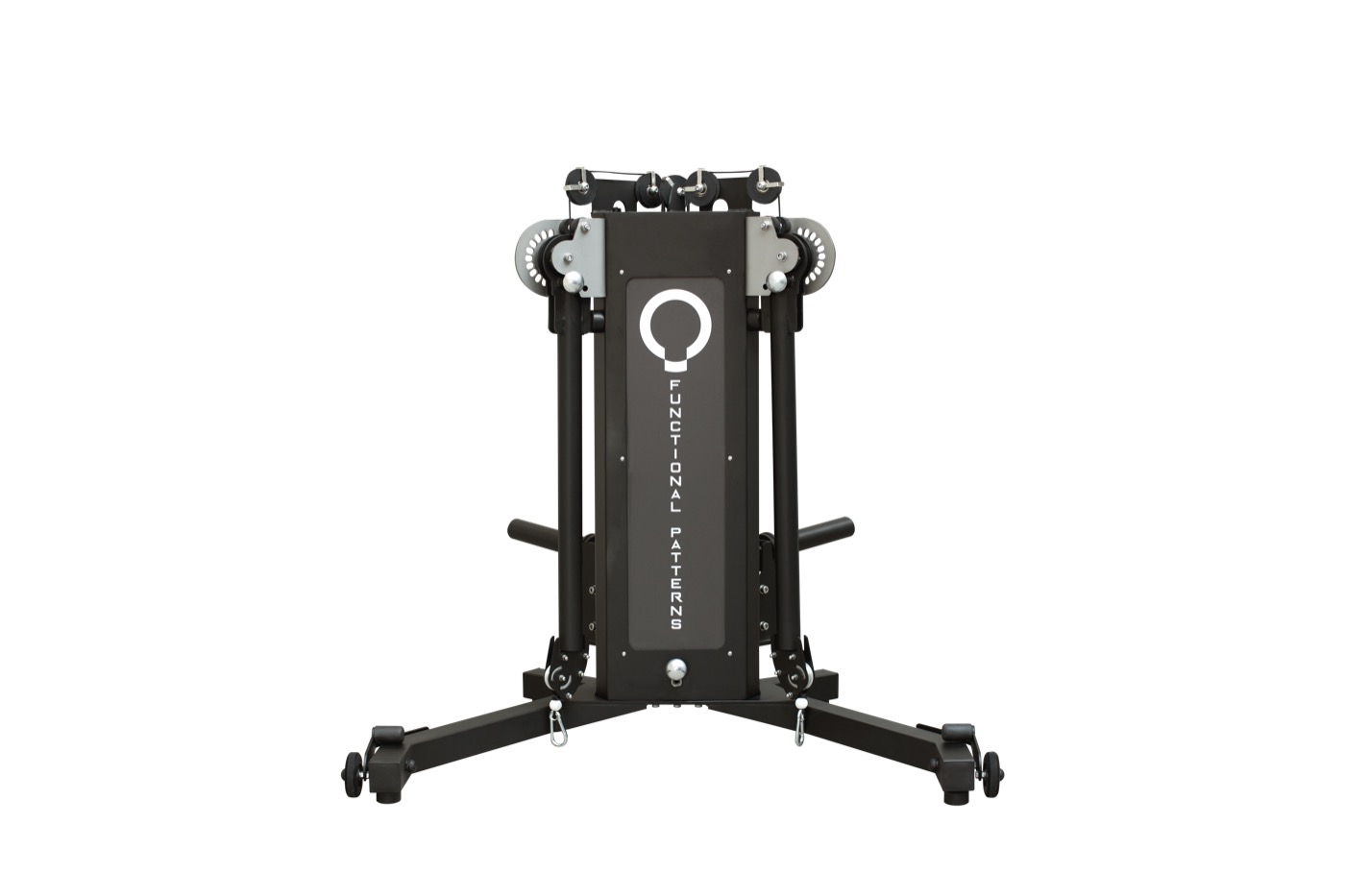
FP Functional Trainer
Functional Patterns
·From $3,130The proprietary cable trainer built for Naudi Aguilar's Functional Patterns biomechanics methodology. Designed around rotational, asymmetric, and gait-pattern loading rather than the traditional sagittal-plane lifts that most cable trainers are built around. Adjustable arms, multiple anchor points for FP-style movements, and pulley geometries optimized for the system's signature exercises. Controversial in mainstream strength circles; deeply researched in posture and movement-rehabilitation communities. Not equipment that ends up in a home gym by accident — whoever spec'd it was reading specific training literature.
The Cardio Zone
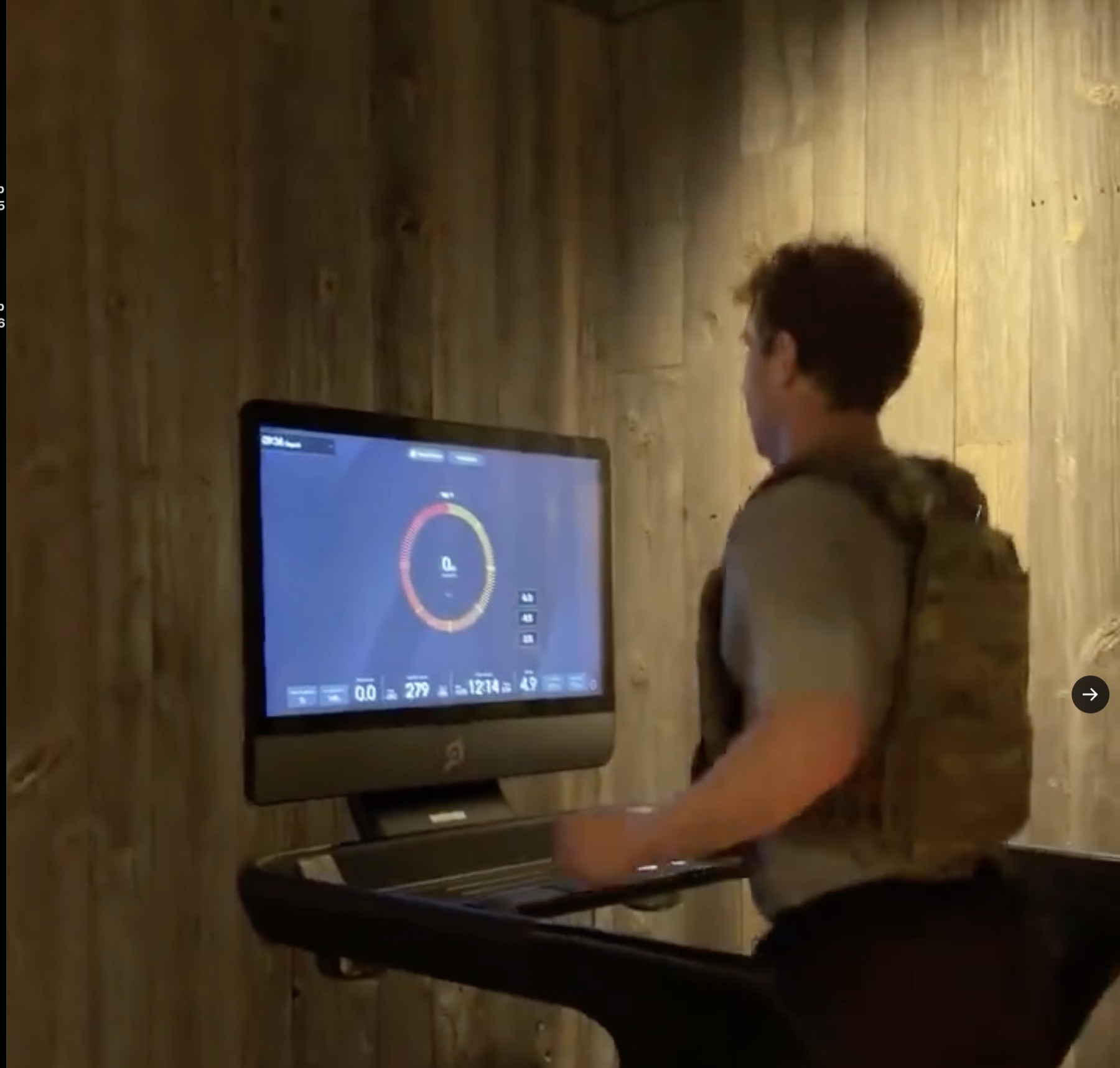
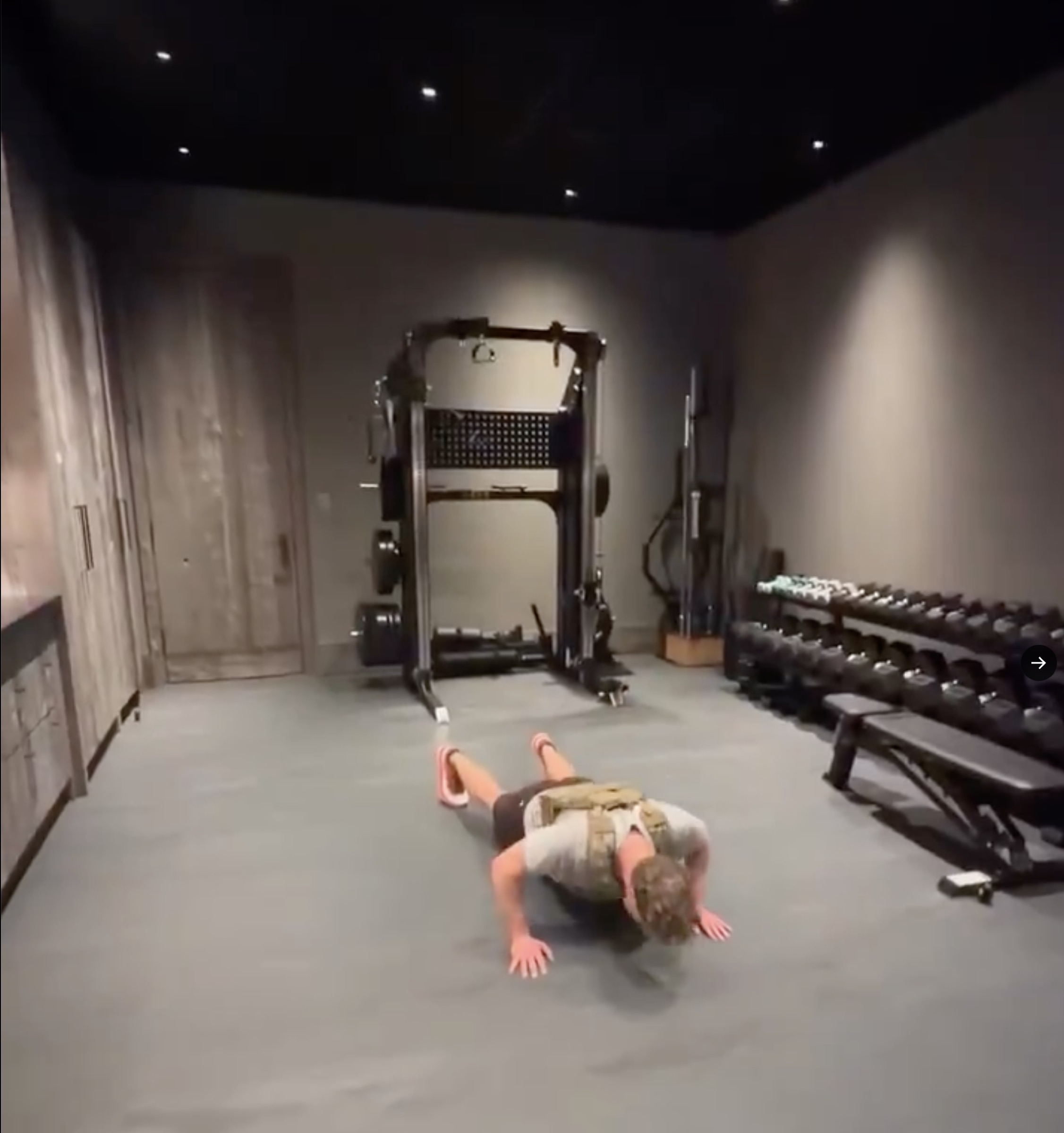
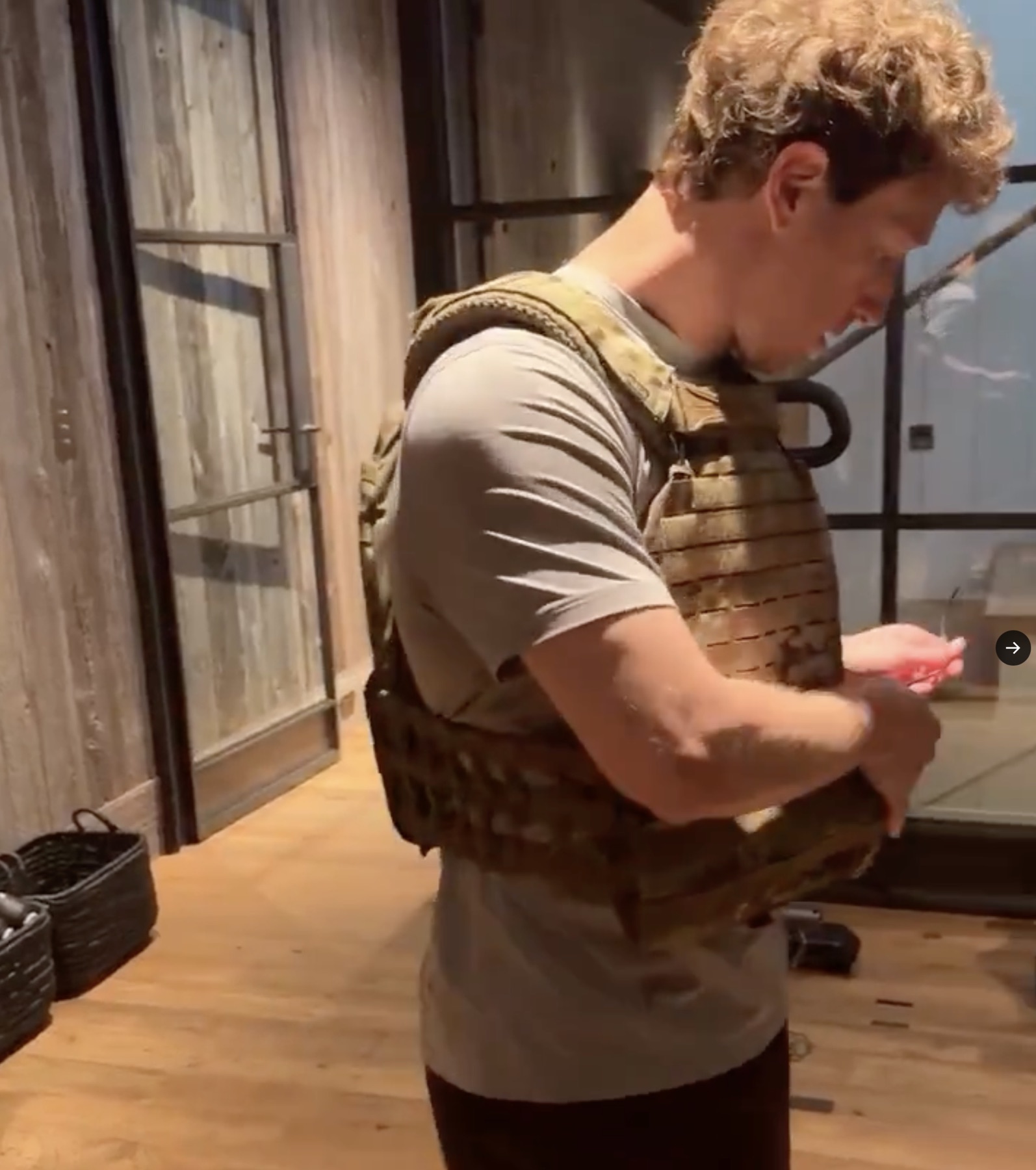
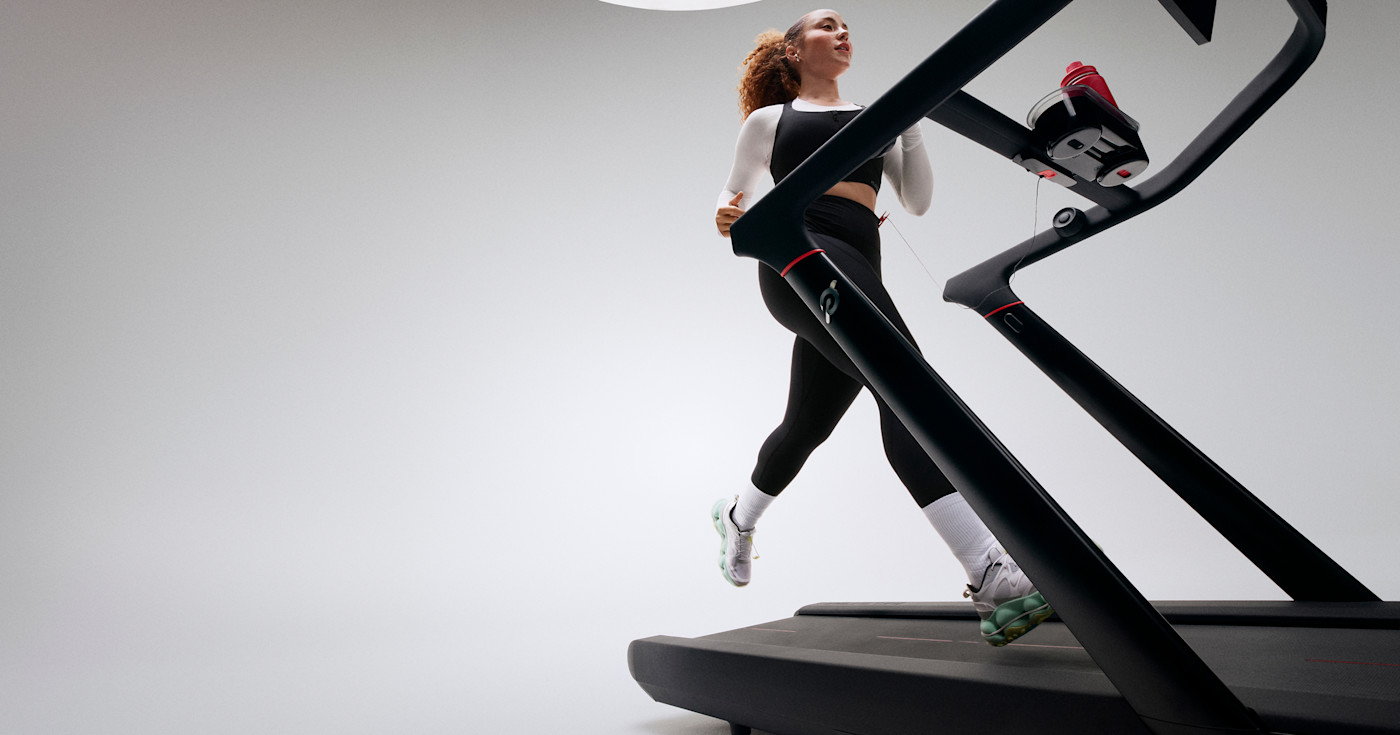
The adjacent cardio zone holds a Peloton Tread. Worth noting that Zuckerberg is photographed walking on it under load — wearing a tactical weight vest — rather than running. Rucking is the move there, not Zone 5 cardio. That's an MMA conditioning approach, not a Peloton-influencer one.
The weight vest itself is a 5.11 Tactical plate carrier — a military-style vest rather than the colorful "weighted-vest" branded versions sold to fitness consumers. The 5.11 vest is rated for actual plate loads and shows up in special operations and law enforcement contexts. In a home gym, it signals someone who chose function over aesthetics on the one piece of equipment touching their skin most often.
What the Setup Tells You
Most home gyms reveal the owner's training philosophy in their selection. This one is unusually legible.
- No machinesNo leg press, no chest press, no bro-rig isolation pieces. Everything either loads the full body or trains a specific functional pattern.
- No mirrorsNone visible in the clips. The room isn't built around aesthetic feedback — bodybuilding-style 'watch yourself flex' doesn't appear to be part of the program.
- Free weights + cablesBoth the Eleiko rack and the FP trainer are full-range systems. They don't constrain movement paths. That's the choice you make when you train sports, not mirror muscles.
- Carries + ruckingWeight-vested pull-ups, weighted push-ups, rucking on the treadmill. Conditioning driven by movement under load. Old-school MMA and military-style.
- Elite-niche brandsEleiko (Olympic federations). Kabuki (specialty-bar nerds). Functional Patterns (biomechanics-obsessed). 5.11 (military-grade). Peloton is the only mainstream label, and even there the use case is closer to ranger school than cycling class.
This isn't a "lots of money, no idea what to buy" gym. It's a "deliberate research, expensive execution" gym.
What's Actually Worth Stealing
The Zuckerberg gym is, in some ways, a less-replicable build than the more visually maximalist ones — because the value is in the selection, not the spend. But the principle behind it scales down cleanly.
- 1Pick the elite-niche brand over the generic premium one. Eleiko over a mid-tier line. Kabuki over a standard bar. 5.11 over a fitness-branded vest. The marginal cost is real but limited. The marginal quality is significant.
- 2Train movement patterns, not body parts. A rack and a functional trainer cover more ground — literally — than a room full of machines.
- 3Ruck instead of run. Weighted vest plus walking is one of the most underrated conditioning protocols in existence. Joint-friendly, scalable, and it translates directly to general physical capacity.
- 4Hex-head dumbbells over round. They don't roll, they don't slip, they survive being dropped. A small detail that compounds across years of use.
- 5No mirrors is a choice. A gym without them rewards how you feel rather than how you look. Worth considering.
The Throughline
The fragments tell a consistent story. Zuckerberg's gym isn't trying to impress — it's barely been documented publicly — but it telegraphs serious training the moment you read the labels. No machines, no commercial chrome, no influencer-grade rack from the mid-tier brand. Just a Swedish Olympic rig, a specialty bar from a niche American manufacturer, a controversial biomechanics cable system, and a treadmill being walked on under a weight vest.
It's a quiet flex of a different kind — the kind where the people who recognize the equipment understand what's going on, and the people who don't, don't. Probably the point.
Compound commentary and curation. Photography from Mark Zuckerberg's Instagram. The hero image is an AI mockup based on video stills, created for editorial illustration.
More Builds:
All Builds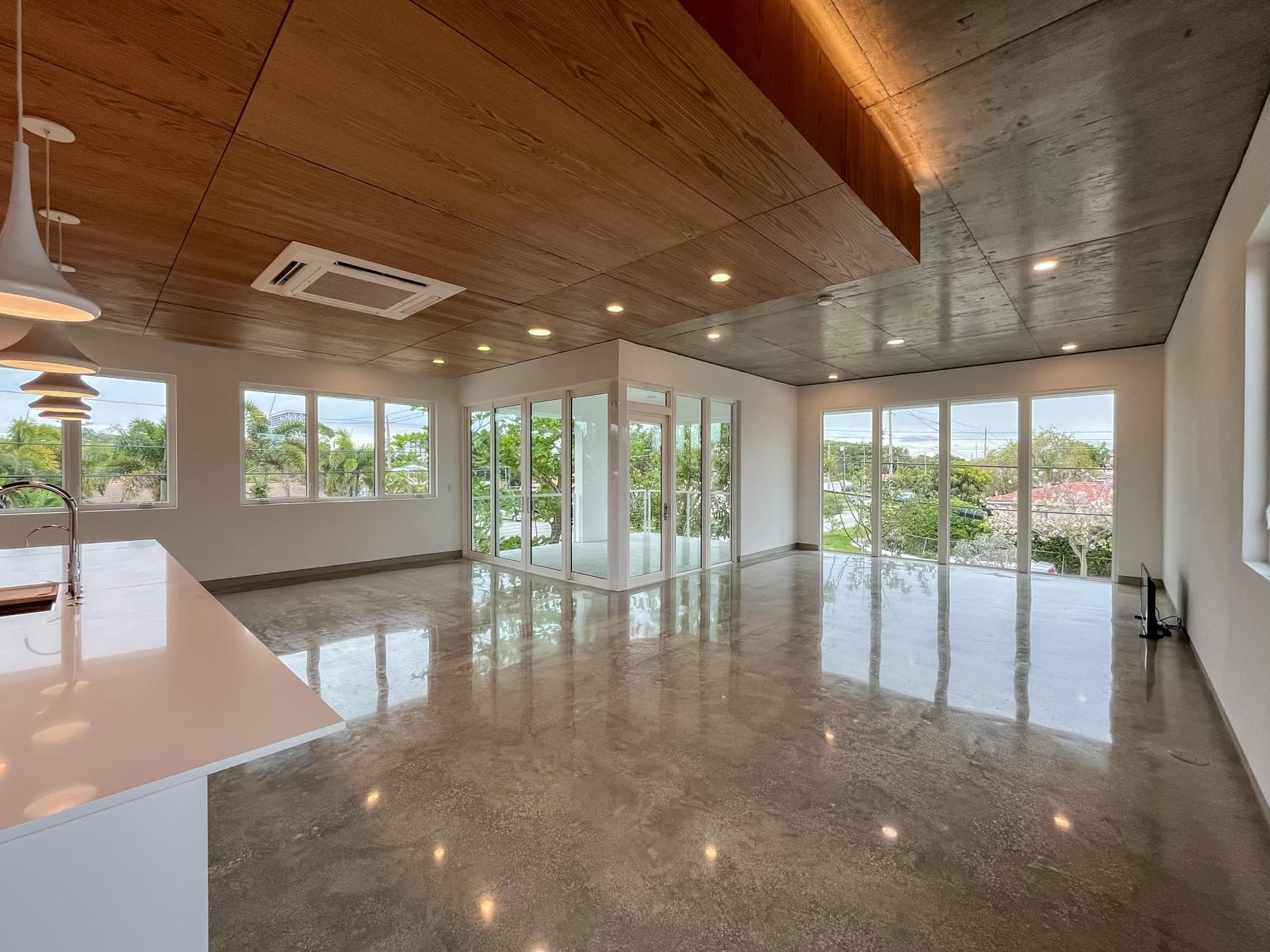
The Miami Home That Became the World's First WELL Residence
The first house on earth certified under WELL's residential standard — built in Miami with no drywall, no AC ducts, and every pipe reachable behind removable formaldehyde-free oak panels, on columns ten feet above a flood-prone city.
A Modern English Countryside Gym
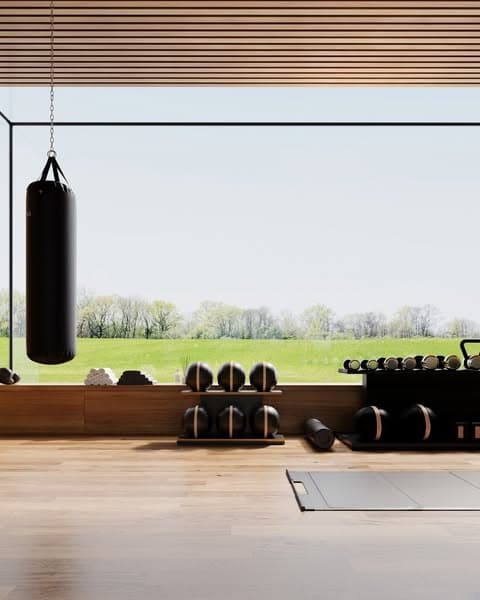
A luxe home gym at a modern estate in the English countryside, designed by Sportova — warm oak slats wrapping the walls and ceiling, a full wall of glass onto rolling green, and sculptural weights and yoga equipment by PENT.
Greg LaVecchia's Custom Gym and Training Property in Austin
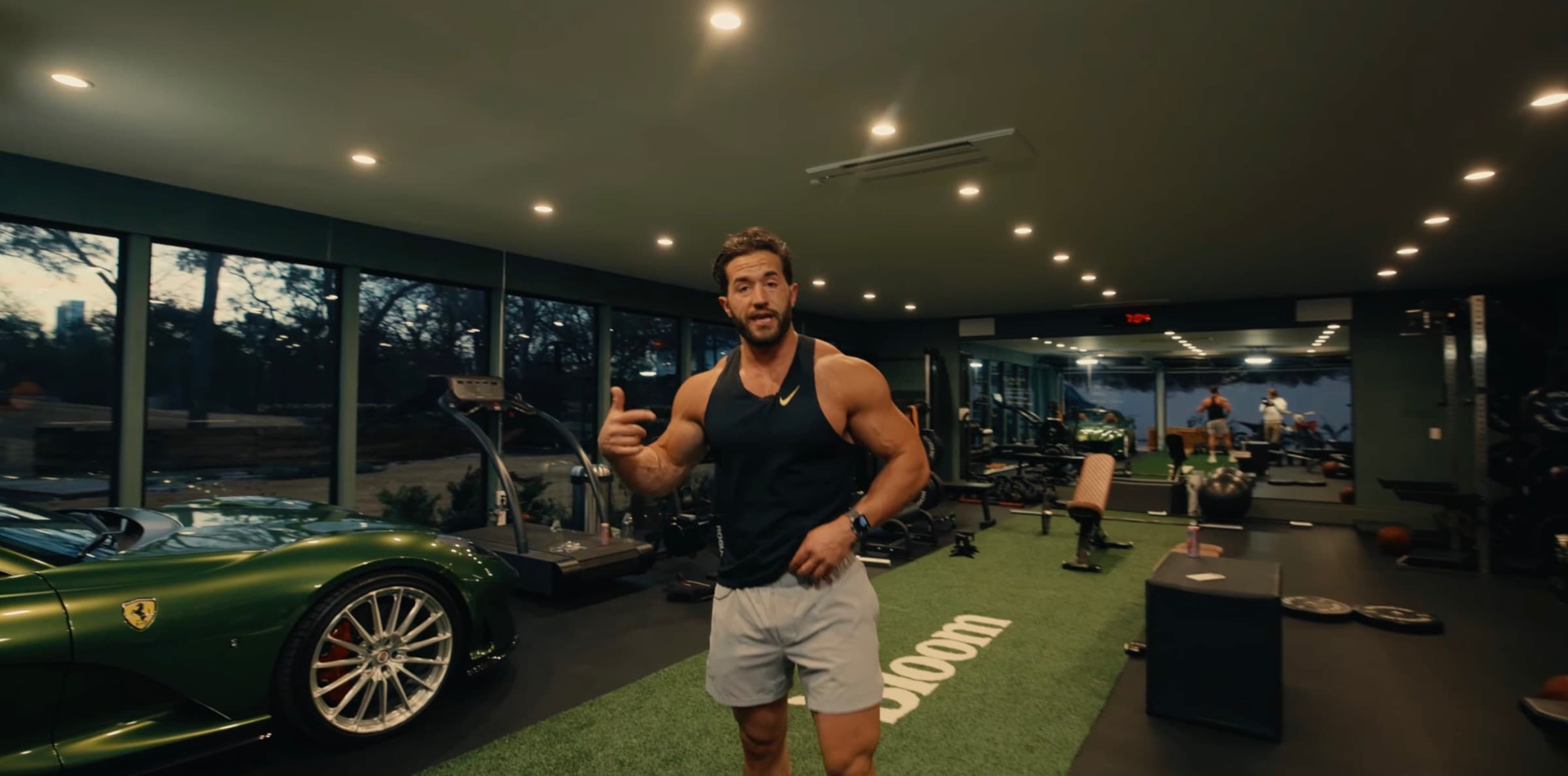
A custom green-and-leather home gym from the founder of Bloom Nutrition, backed by a wood-burning backyard sauna, a cold plunge, a recovery room with red light and hyperbaric oxygen, and three central Austin lots stitched into a private park.