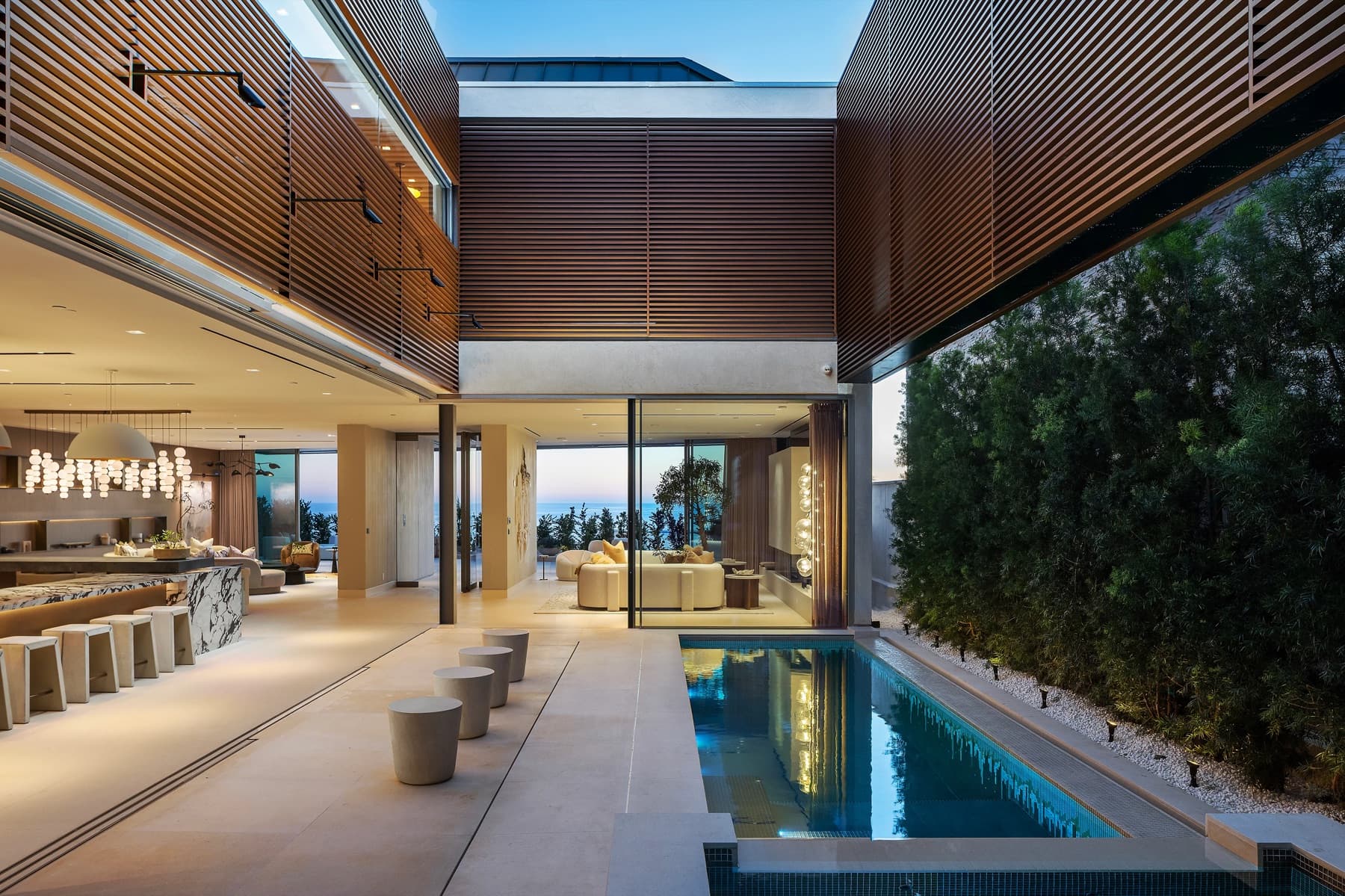
There is no resident to decode here. This is a spec property, currently for sale, which makes it a cleaner design document: no personality, no routine mythology, just the building.
The listing at 3512 Ocean Boulevard is effectively a study in lot maximization. The plot is 8,580 square feet; the interior is 11,628. That only works through architectural choreography: cantilevers, retaining walls, hydraulic car storage, an interior pool courtyard, and a lower level that refuses to feel like a basement.
The public listing credits Nicholson Companies as developer, Geoff Sumich as architect, and Lisa McDennon for interior design. VALIA Properties lists the property as Timeless Serenity, with Steven Sergi and Jason Foreman representing the listing.
The Front Terrace
The house sits roughly nine to ten feet above street level, which does the privacy work before the architecture has to. Ocean Boulevard can stay busy below while the main floor looks past the hedging toward Newport Harbor and the Pacific.
Honed limestone runs from the terrace into the interior, so the glass wall does not read as a hard boundary. Two seating zones, stone fire pits, overhead heaters, and the column-free cantilever above turn the front into an outdoor living room rather than a driveway-facing patio.
The Main Level
Living, dining, kitchen, and lounge run as one continuous floor plate, anchored by ten-foot motorized sliders that tuck into the walls. The corners open, so the terrace and main room behave as one space when the weather cooperates.
The kitchen is the showpiece: bookmatched stone island, dual elevation bar seating, induction and gas cooktops, a built-in griddle, brass fixtures, matte lacquer cabinetry, and a motorized bronze-mirror backsplash that retracts into the butler's pantry.
The Indoor Pool Courtyard
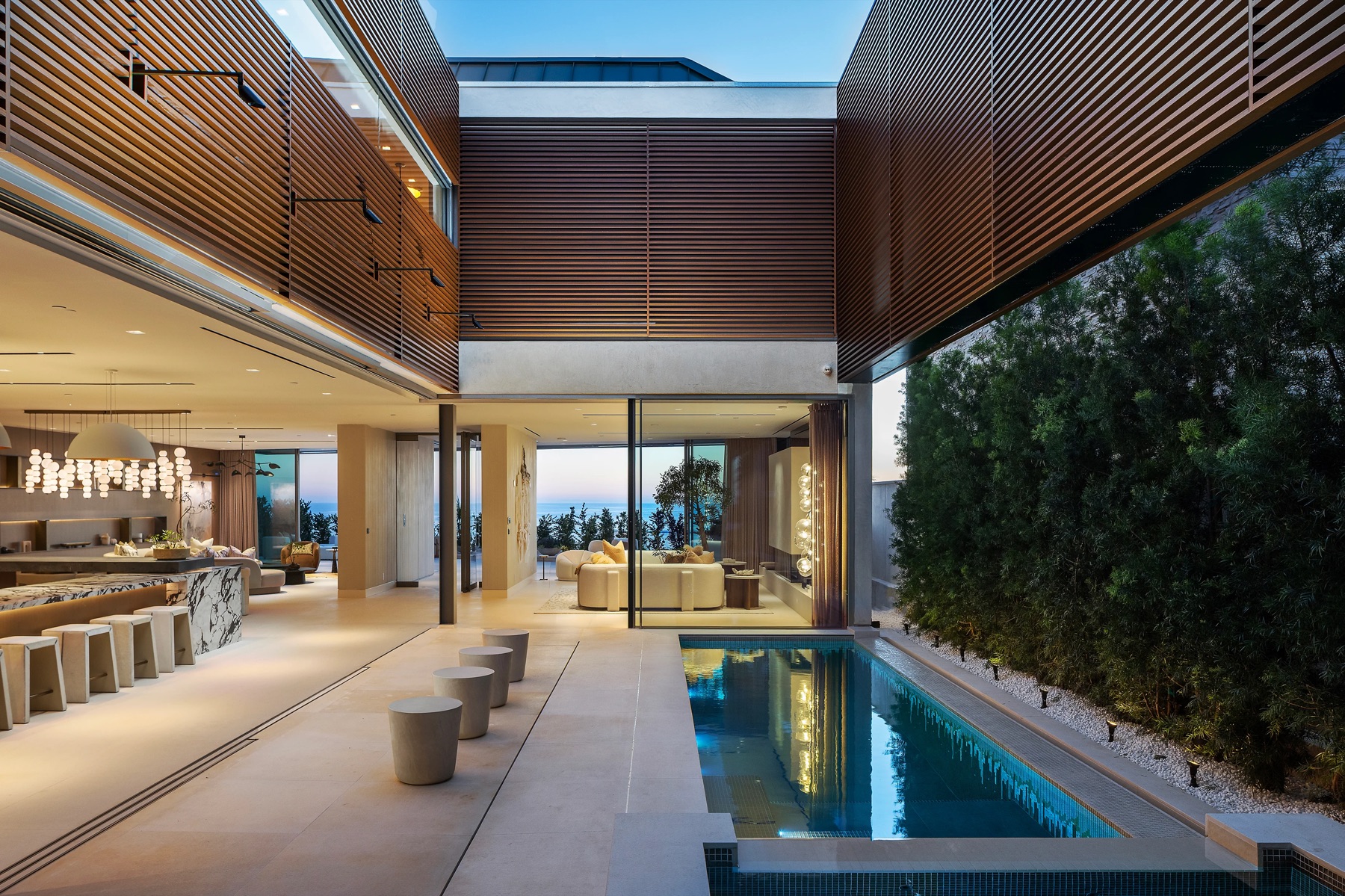
The pool is the architectural set piece because it is pulled inward, not pushed to the edge. That move protects privacy, frees the ocean side for the terrace, gives the kitchen/lounge/office something to look at, and sends light into the lower level.
The most technical detail is the transparent acrylic pool-floor panel over the basement bar. Bubblers turn the water into moving light below. It is the kind of feature that sounds decorative until you think about waterproofing acrylic into a concrete-and-rebar pool shell for decades.
The Office / Lower Guest Suite
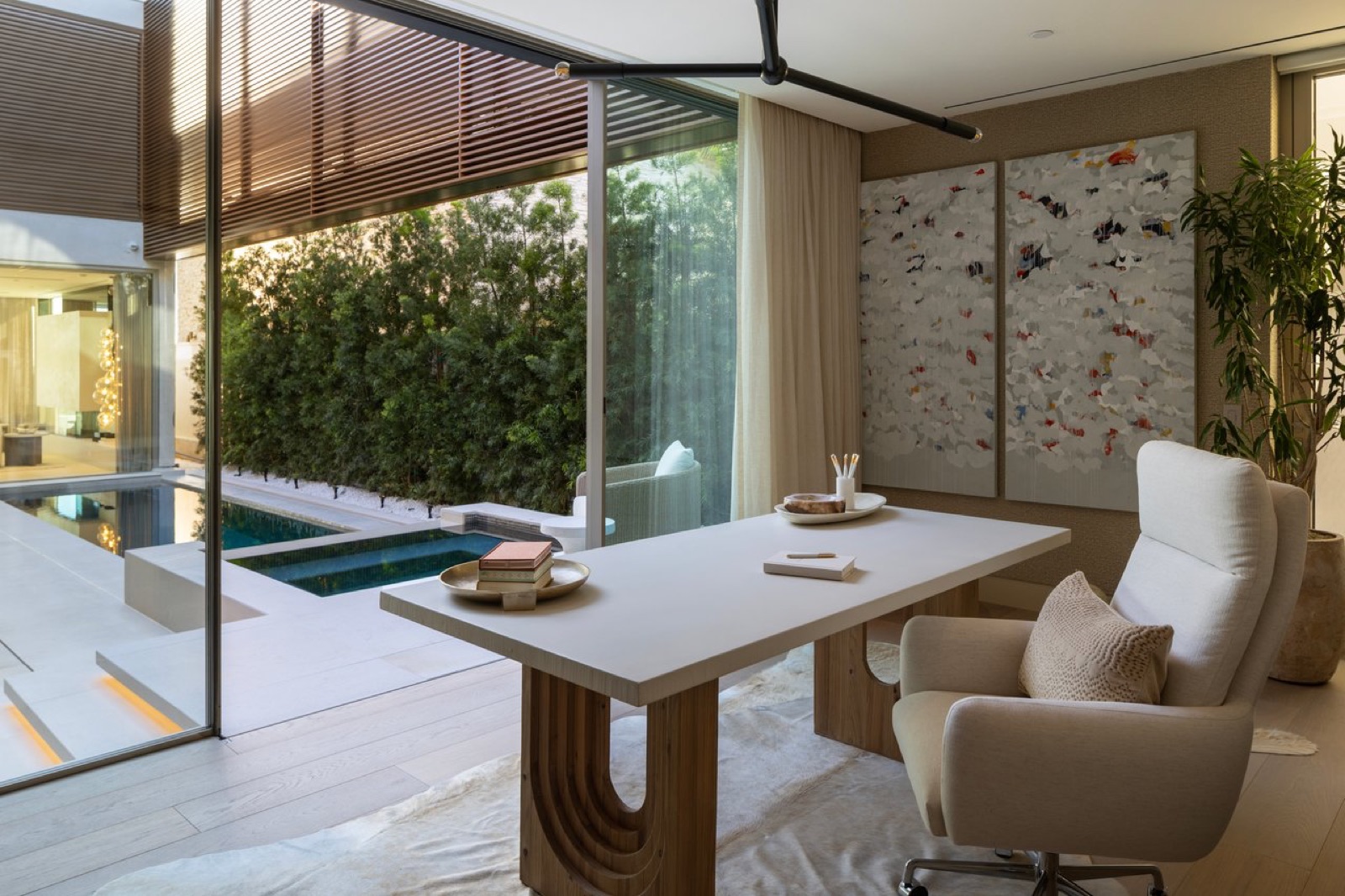
Off the main level, a guest suite is staged as an office: custom desk, layered wall treatments, walk-in closet, full bath, and low-rise sliders that open directly to the pool courtyard. It works because the view is internal and controlled.
Speakers are integrated into the plaster rather than mounted as visible equipment, and Josh AI runs the smart-home layer.
The Garage
Three cars fit on the main level. The fourth arrives through a steel floor plate that sits flush with the garage floor. A hydraulic lift brings the basement-level car up through the floor on chains and steel columns.
The listing stages the point clearly: Rolls-Royce Cullinan, Lamborghini Revuelto, and a McLaren Senna below grade. Roughly 1,000 square feet of garage across both levels turns car storage into a mechanical room, not just parking.
The Lower Level
The lower floor avoids the basement problem through volume and daylight. Tall ceilings and a full-height glass wall open to a sunken light well, so the level reads closer to a ground floor than a cellar.
The lounge, bar, wine cellar, cigar lounge, and theater all orbit material detail: oak ceiling panels, Tom Dixon lighting, bookmatched marble behind the bar, a 664-bottle glass wine room, walnut end-cut cigar-lounge flooring, and a cinema room treated more like a lounge than a black box.
The Lower-Level Spa
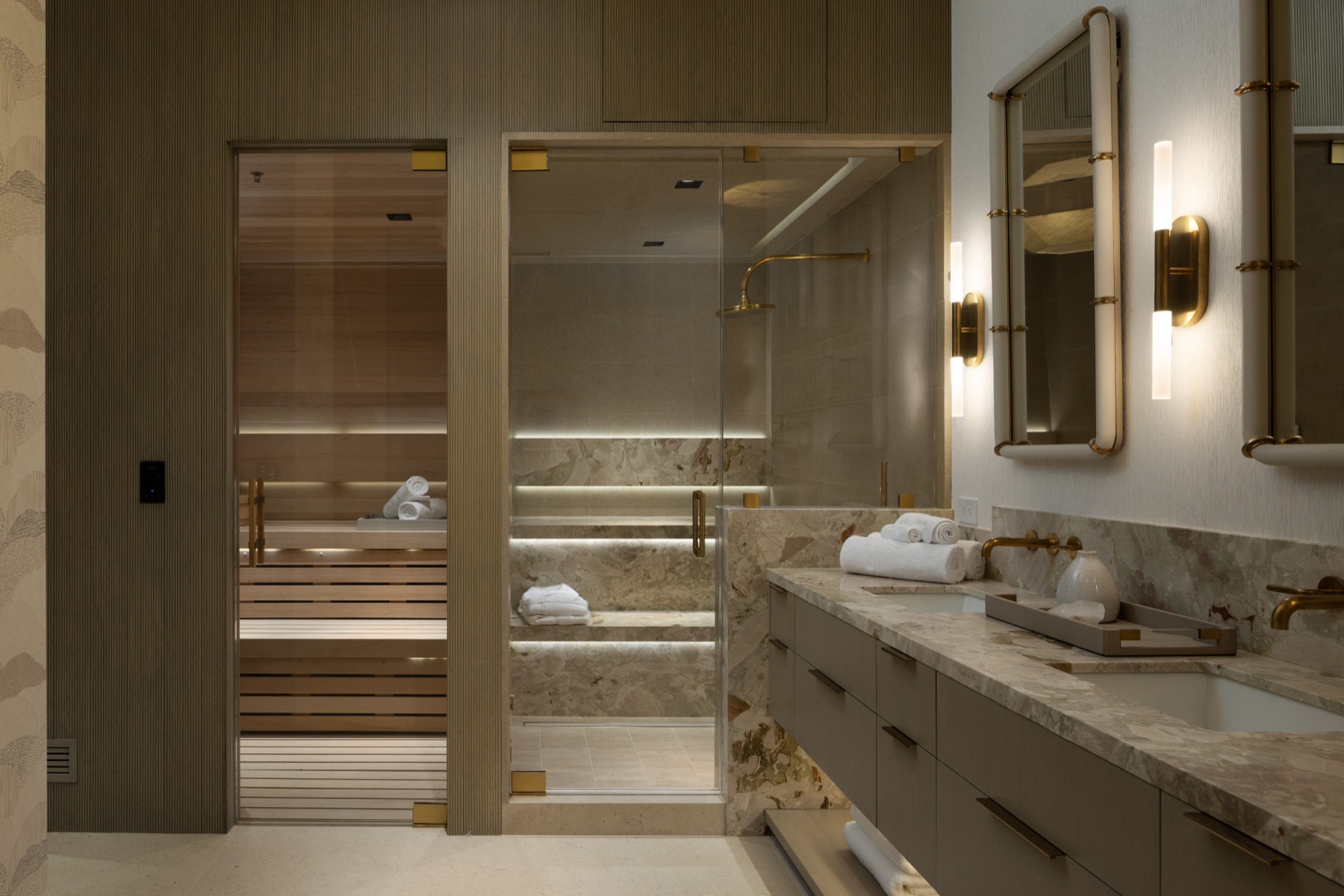
This is where the build stops being a luxury house with wellness amenities and starts behaving like a private spa hotel. The room combines cedar sauna, steam shower, double vanity, makeup station, towel cabinetry, and water closet into one coherent suite.
The key move is adjacency. The sauna and steam shower are not tucked in a gym corner; they live in the same enclosure as the vanity and changing area. That turns the routine into a room, not a gadget.
The Lower-Level Gym
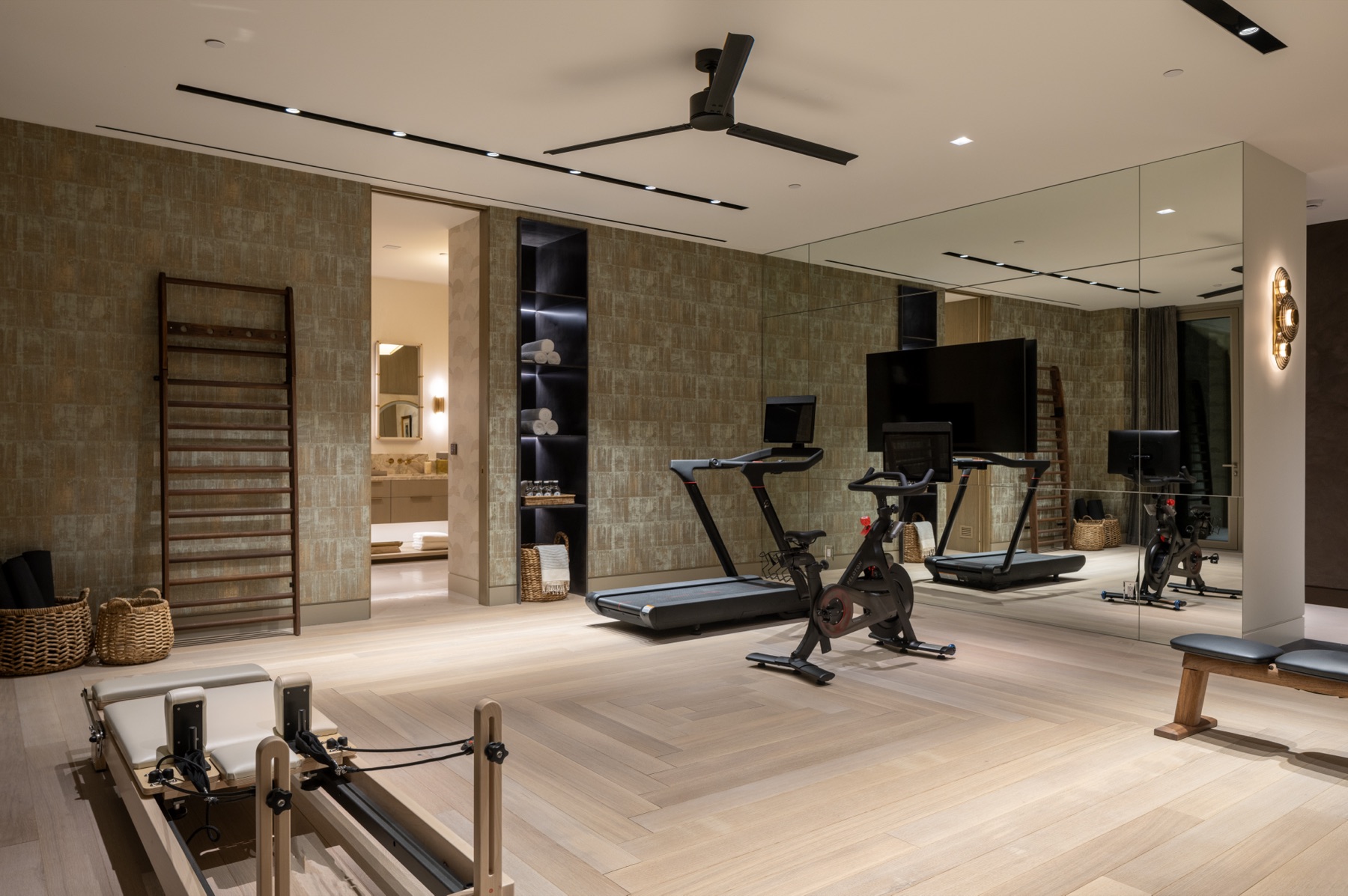
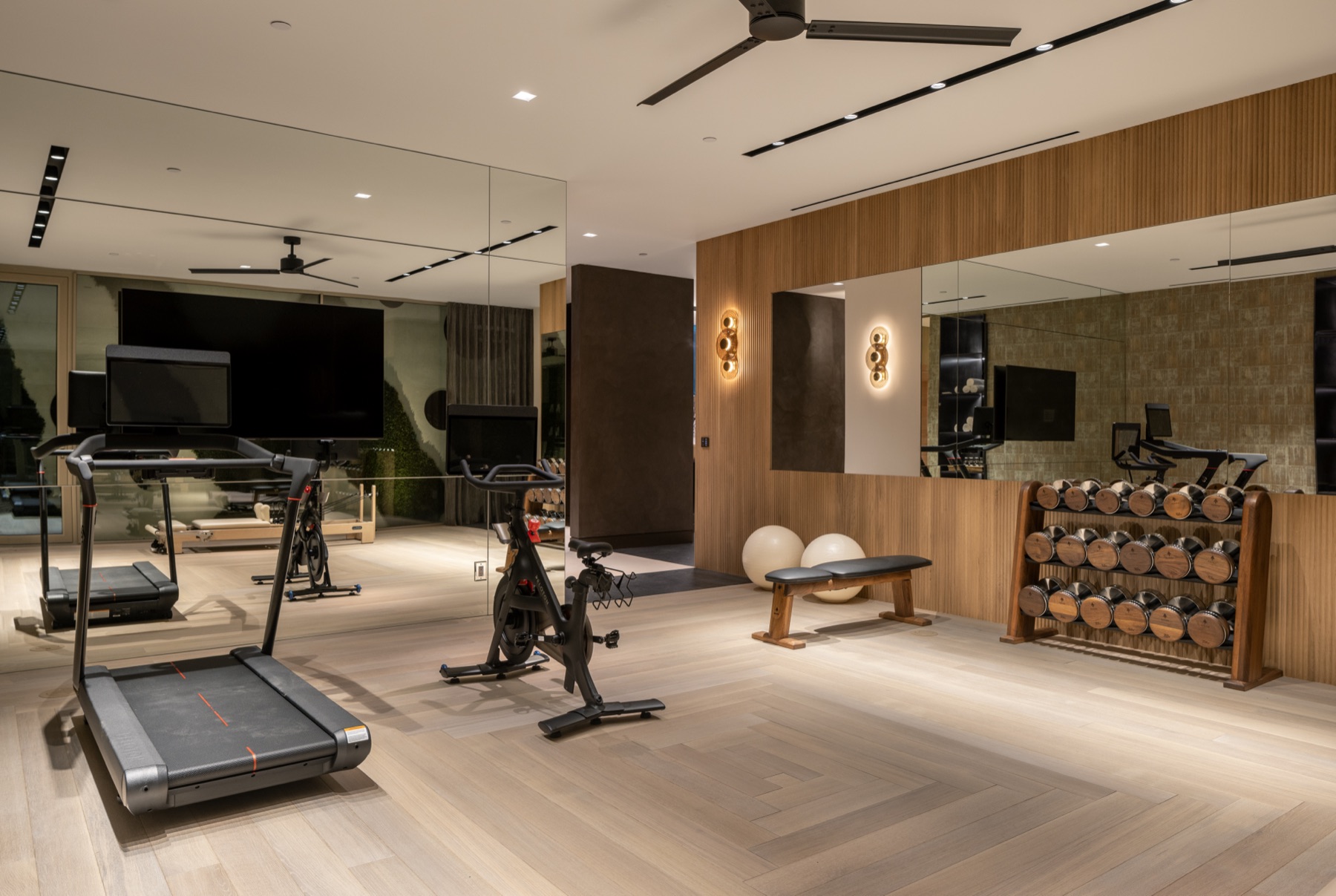
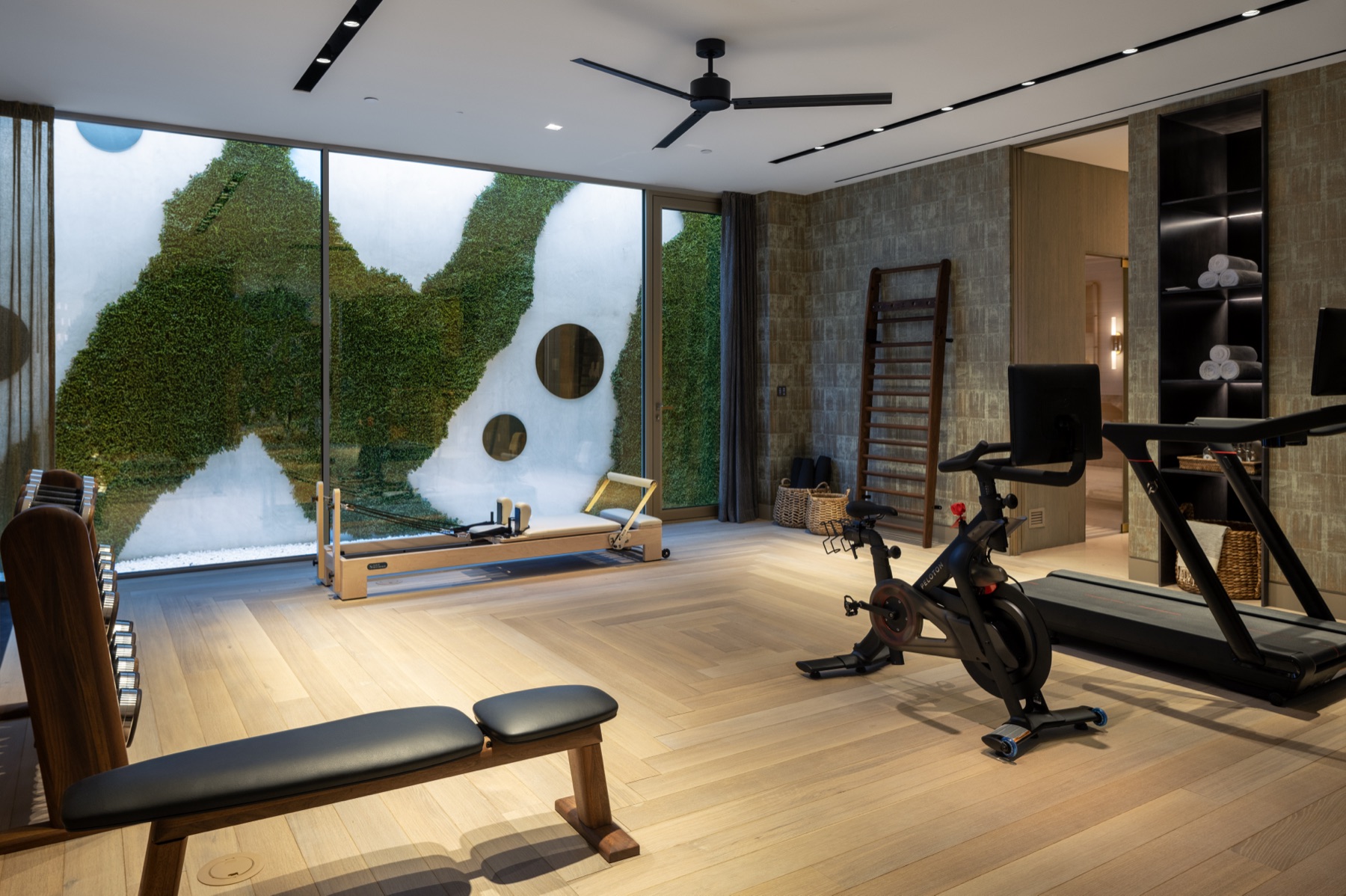
The gym is a recovery-and-routine room, not a powerlifting build. Treadmill, Peloton, Pilates reformer, Swedish wall bars, custom walnut-wrapped dumbbells, and a walnut bench sit on concentric herringbone hardwood flooring.
The best detail is the hidden connection to the spa bath behind reeded wall panels. Gym, bath, sauna, steam, and massage room are a single wellness floor instead of disconnected amenities.
The Second Floor
The second floor holds the more conventional residential program: hallway lounge, laundry room, powder room, and three guest suites. The difference is execution. Two washers, two dryers, and real hanger space make the laundry a working room. Guest baths each get their own stone and wall treatment.
The standout guest suite is the one with a Juliet balcony over the pool courtyard and warm teak-marble bath. It repeats the house's main trick: every room either borrows light or frames another room doing something more interesting.
The Primary Suite
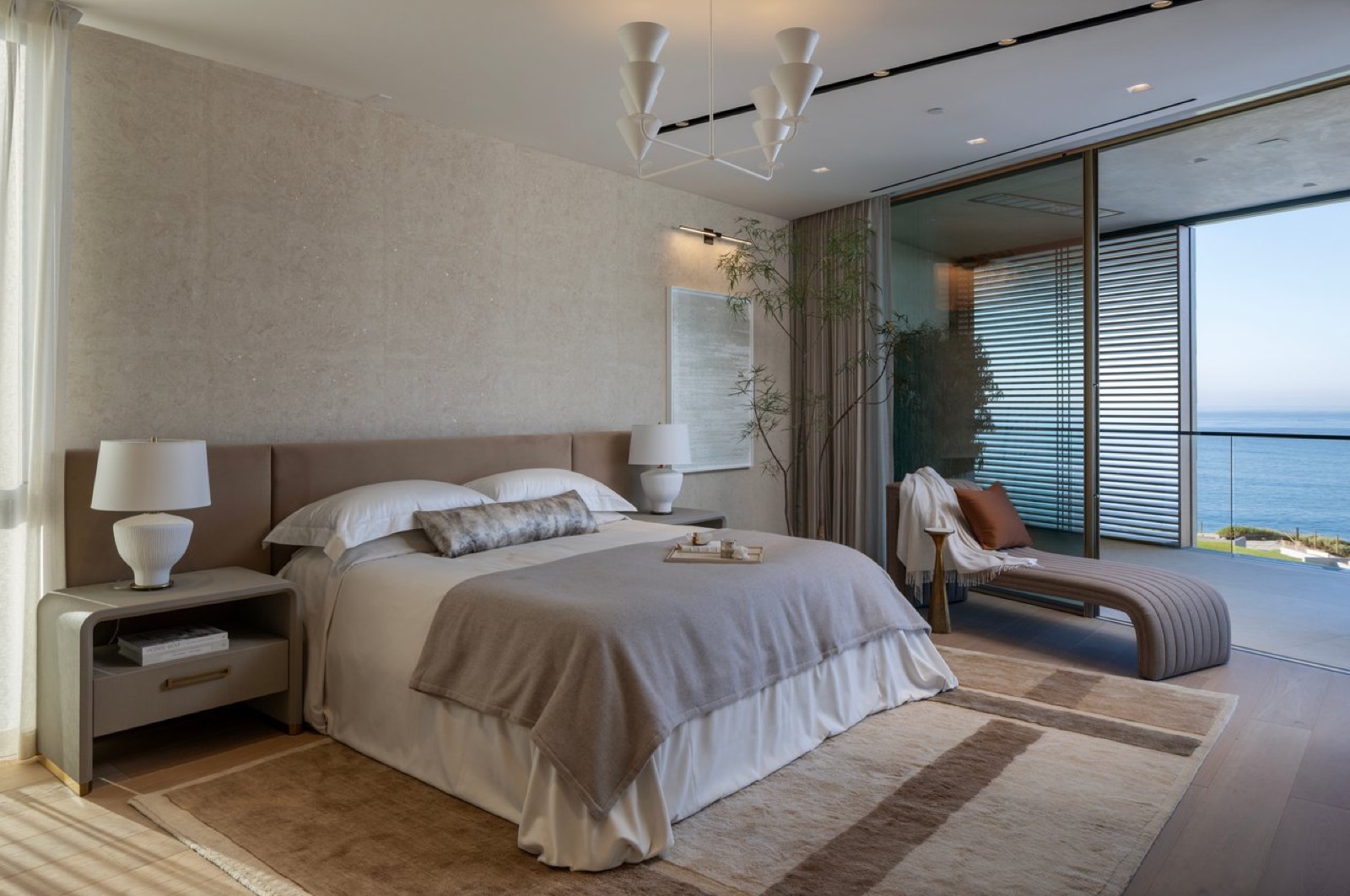
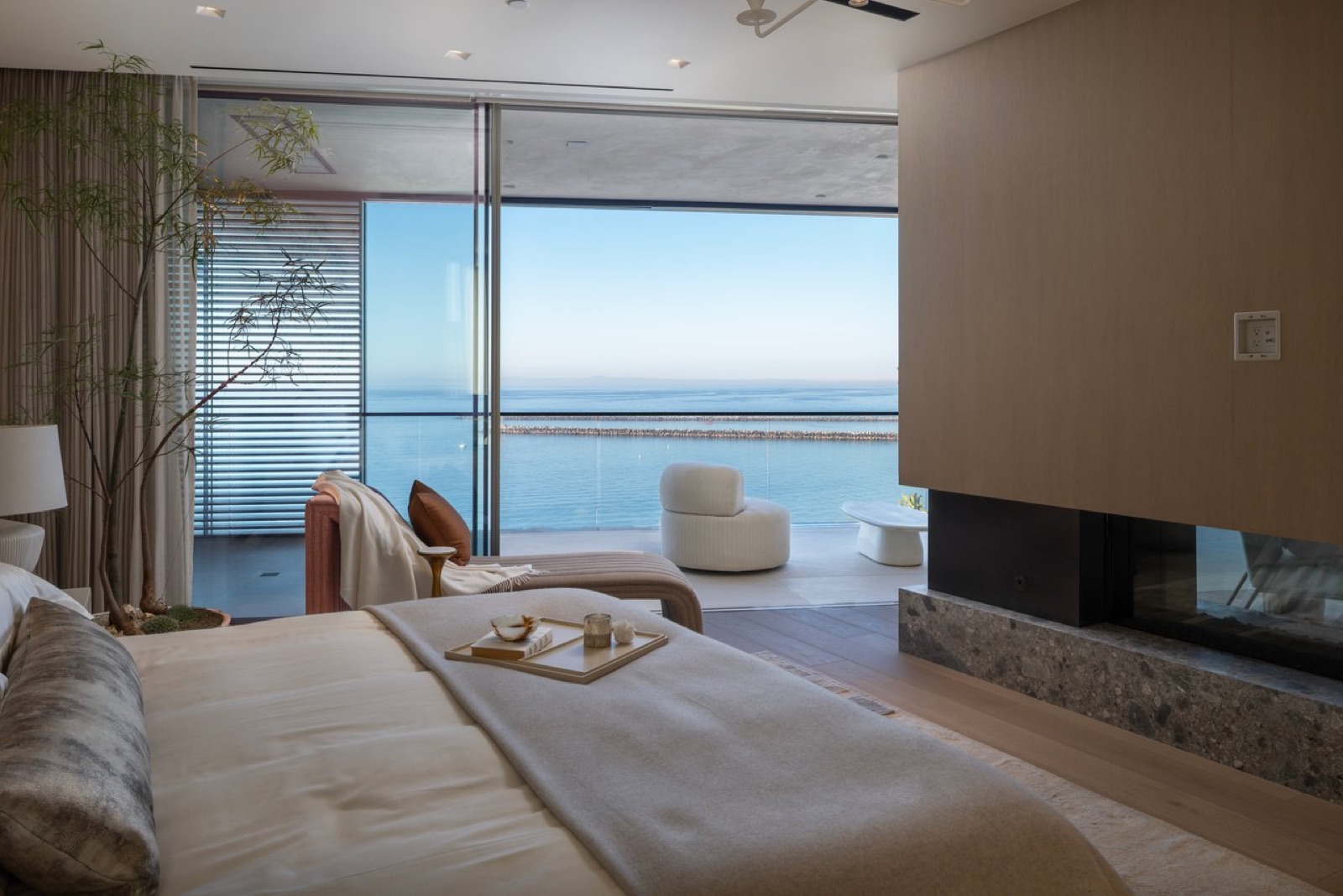
The primary suite is 1,650 square feet and pays off the front cantilever. Four zones sit inside the room: central seating, bedroom, raw-bronze desk, and reading lounge facing a 64-foot span of motorized glass.
The 540-square-foot balcony has no columns from edge to edge. That is the new-construction advantage on Ocean Boulevard: steel-frame spans, uninterrupted ocean glass, and a primary room that feels suspended over the terrace.
Two bathrooms and two closets complete the suite. One bath uses Calacatta Vagli Oro marble with rose-gold fixtures; the other shifts to vein-cut travertine, gunmetal, smoked mirror, and a bronze fantasy marble bench running into the shower.
The Rooftop Terrace
The roof is the element older Ocean Boulevard houses struggle to retrofit. Here, new construction makes it part of the building from day one: TPO membrane, standing-seam metal at the perimeter, subtle deck slopes, integrated drains, and pedestal-system flooring.
The program is built for actual hosting: outdoor kitchen, grill, ice maker, fridges, salt-resistant cabinetry, integrated planter speakers, sunken fire-pit lounge, outdoor TV, powder room at the elevator landing, and two access points.
What's Worth Stealing
Most of this build is unreplicable on a normal budget. The useful ideas are smaller: pull a pool inward for privacy and borrowed light, run one floor material across the indoor/outdoor threshold, make one room architecturally special with a non-default floor pattern, hide speakers in walls or planters, and treat sauna plus steam as a wet-room suite instead of two appliances.
The throughline is new construction doing things renovation cannot: column-free balconies, rooftop terrace infrastructure, hydraulic car storage, and a pool floor that doubles as a light well. None of those moves is enough alone. Stacked together, the building reads as an engineered system.
Compound commentary and curation. Listing information and source imagery credited to VALIA Properties.
More Builds:
All Builds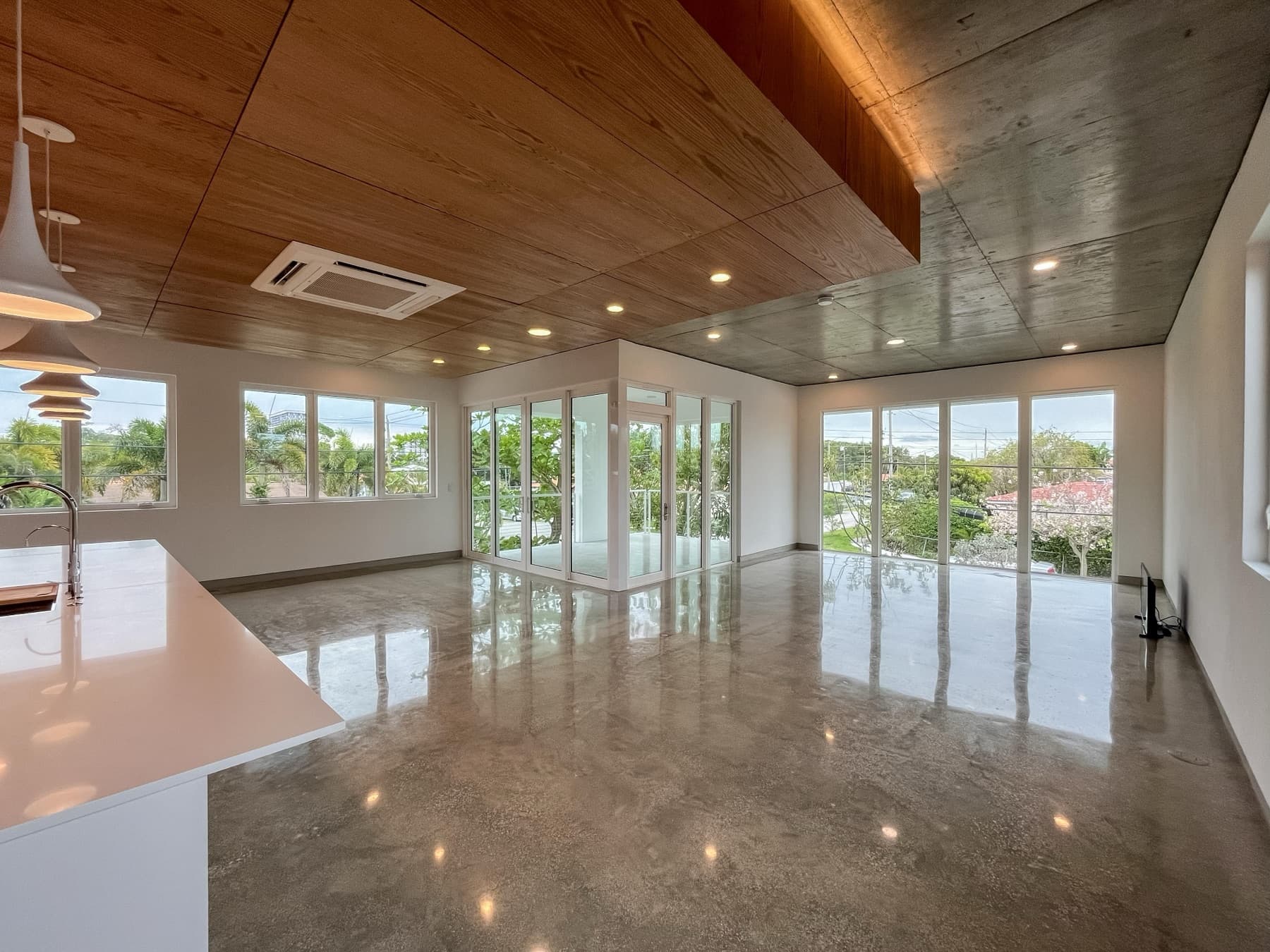
The Miami Home That Became the World's First WELL Residence
The first house on earth certified under WELL's residential standard — built in Miami with no drywall, no AC ducts, and every pipe reachable behind removable formaldehyde-free oak panels, on columns ten feet above a flood-prone city.
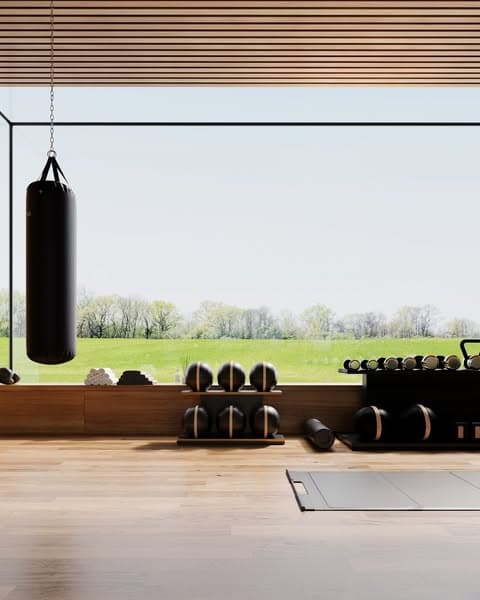
A Modern English Countryside Gym
A luxe home gym at a modern estate in the English countryside, designed by Sportova — warm oak slats wrapping the walls and ceiling, a full wall of glass onto rolling green, and sculptural weights and yoga equipment by PENT.

Greg LaVecchia's Custom Gym and Training Property in Austin
A custom green-and-leather home gym from the founder of Bloom Nutrition, backed by a wood-burning backyard sauna, a cold plunge, a recovery room with red light and hyperbaric oxygen, and three central Austin lots stitched into a private park.