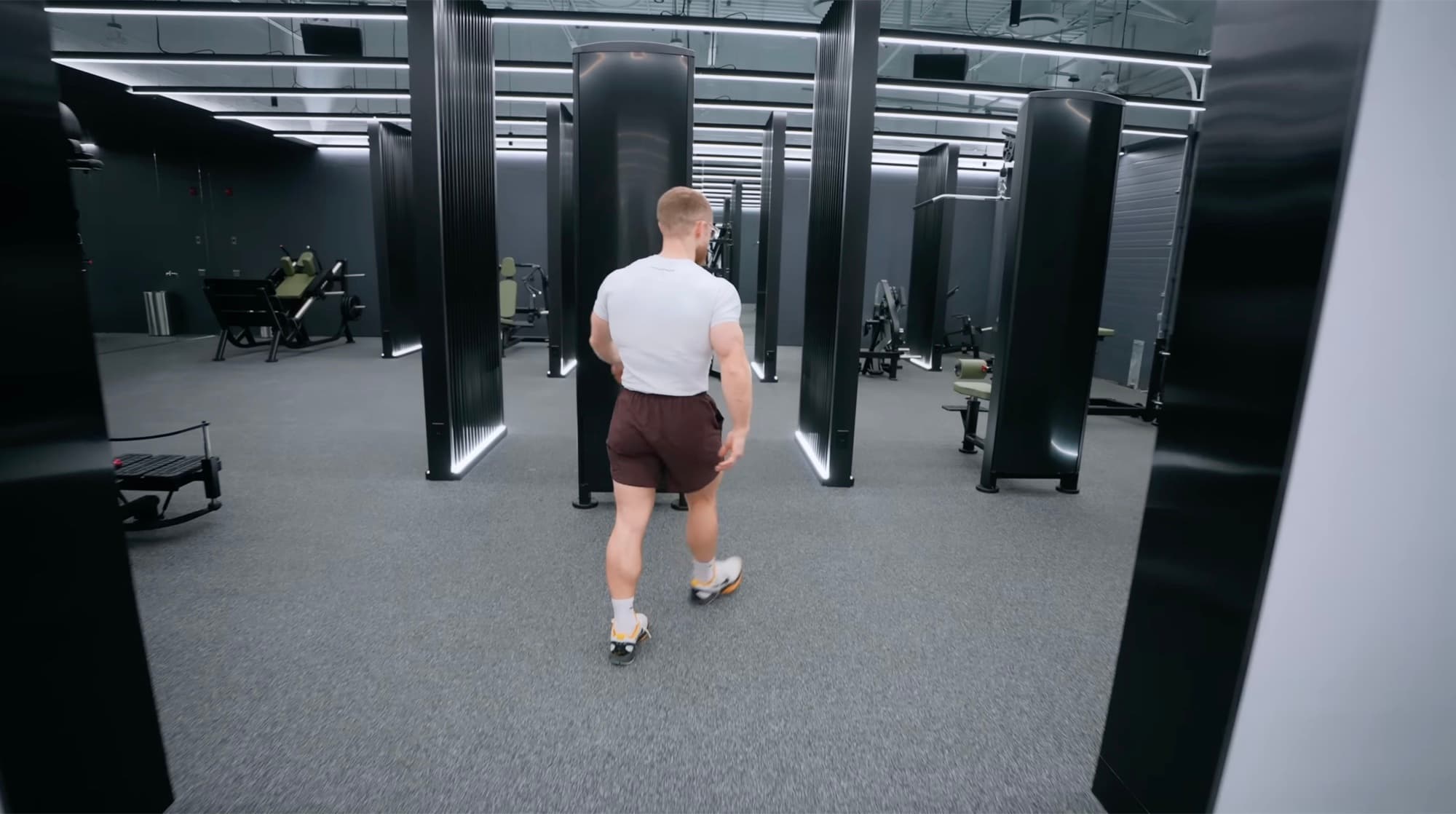
For two years, Jeff Nippard has been quietly building a research facility. Not a gym — a research facility. Four rooms, one lobby, a DEXA scanner behind the far door, and over $300,000 in equipment that nobody sponsored and nothing gifted.
Nippard is a natural bodybuilder, former powerlifter, and one of the few fitness YouTubers who actually reads the studies he cites. The Jeff Nippard Muscle Lab is the logical endpoint of that reputation — a working exercise science facility attached to two gyms and a podcast studio.
Here's the walkthrough.
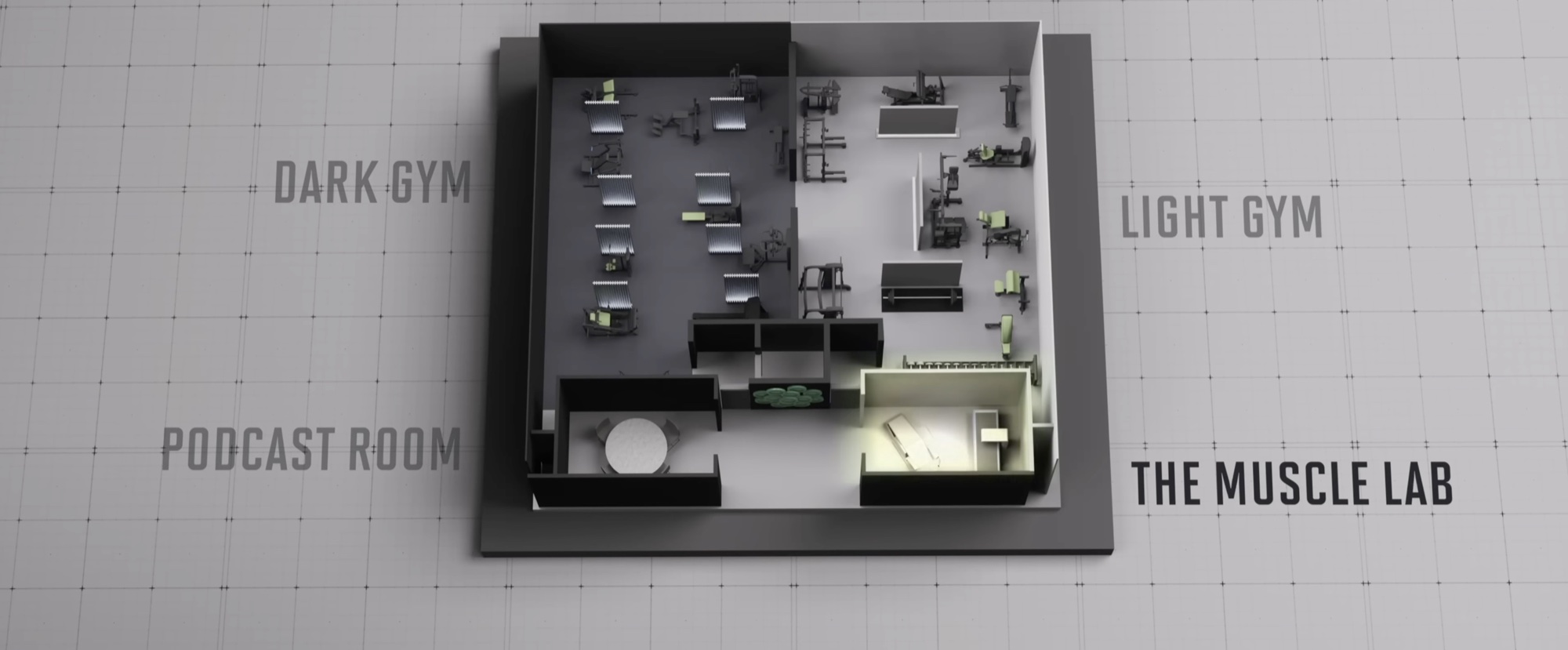
The Lobby
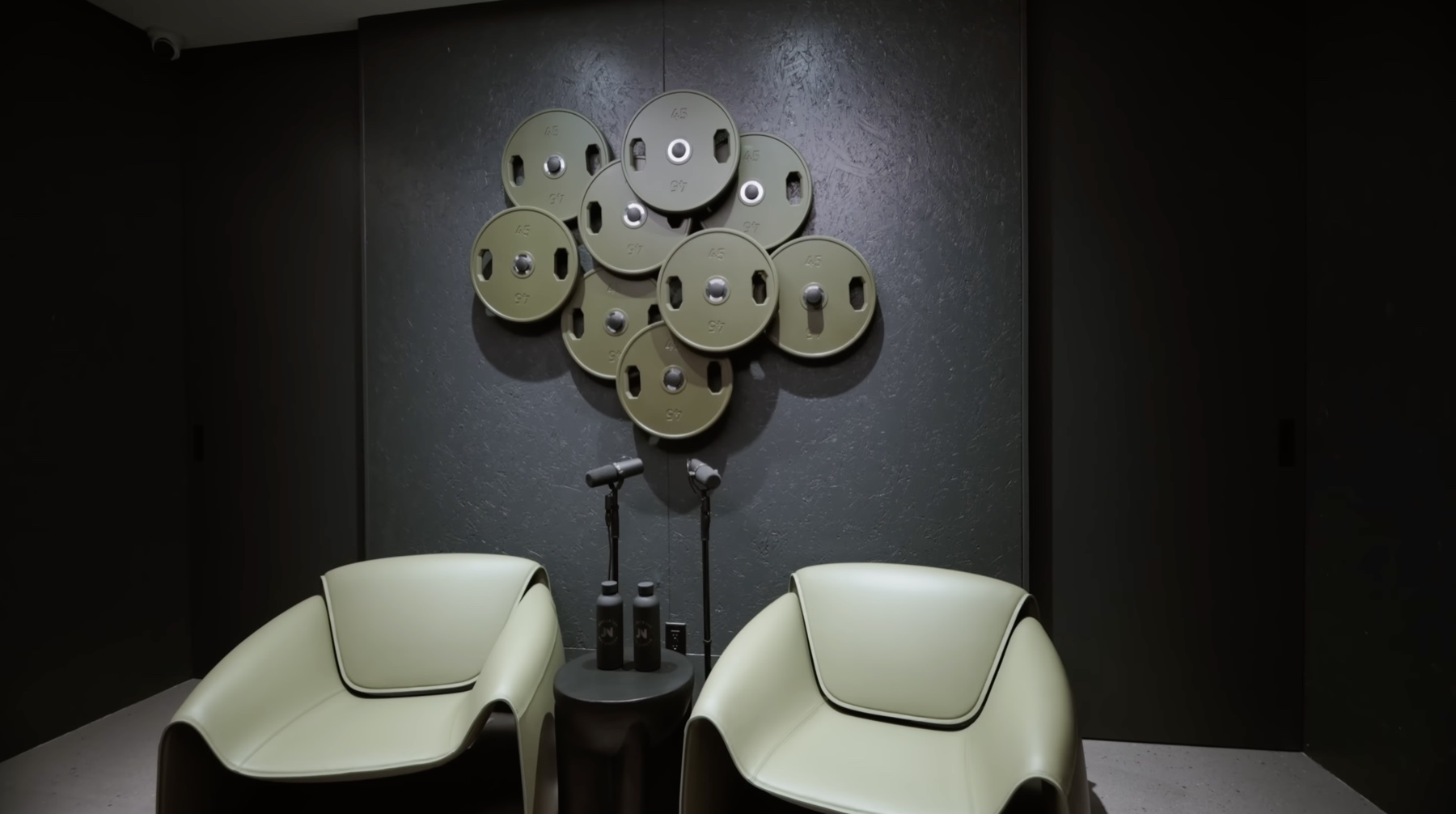
The connective tissue of the whole build. Custom art on the wall, a JN-logo mat on the floor, two doors off either side: one to the light side, one to the dark side. Nothing else.
It's intentionally sparse — a pressure-release between the two gym aesthetics you're about to walk through.
The Light Gym
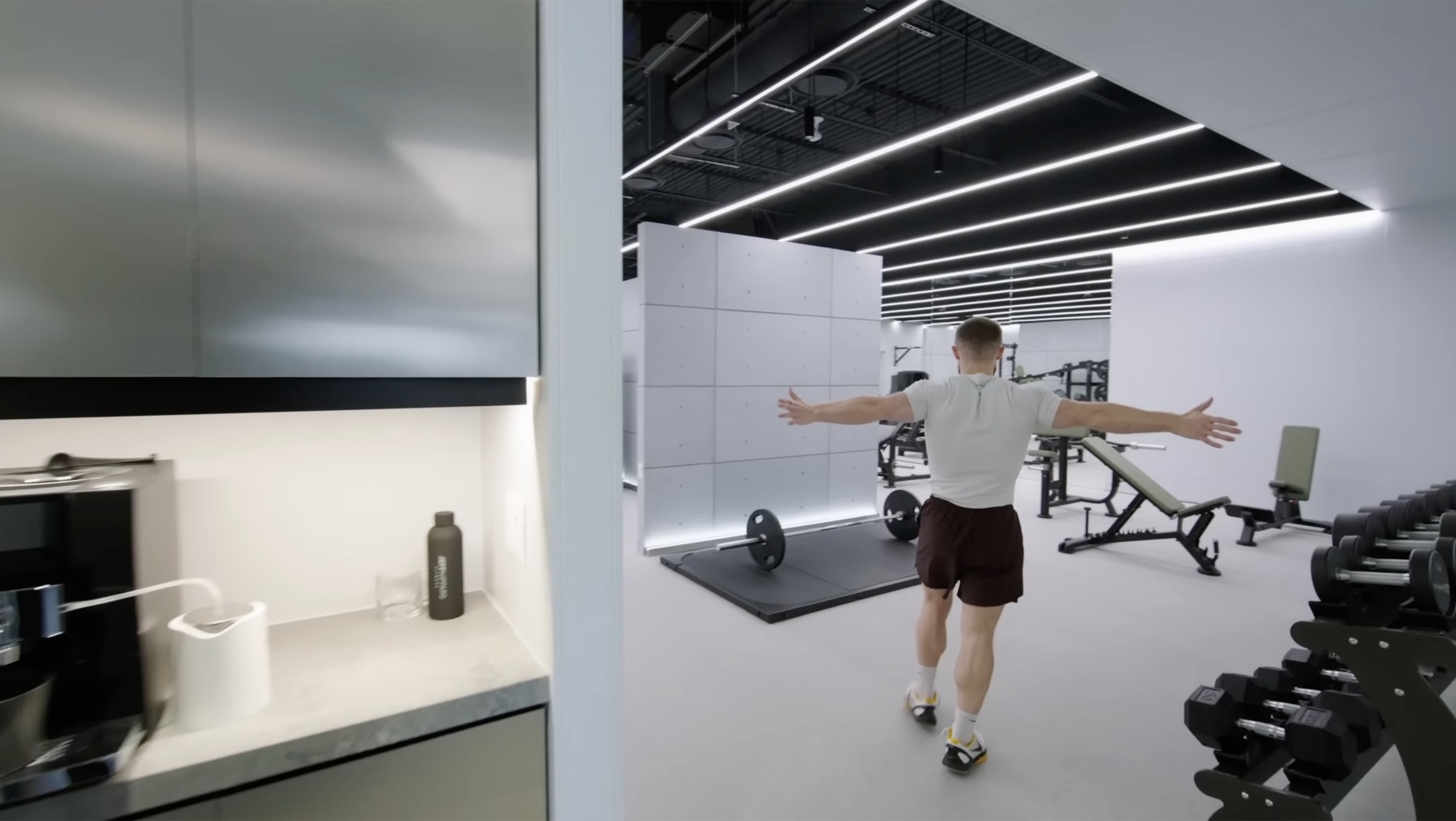
The strength-focused half of the facility. Brighter, whiter, more powerlifting energy than bodybuilding.
First thing on the floor: a deadlift platform. Past that, the room opens into machine work, and this is where Nippard's preferences get specific.
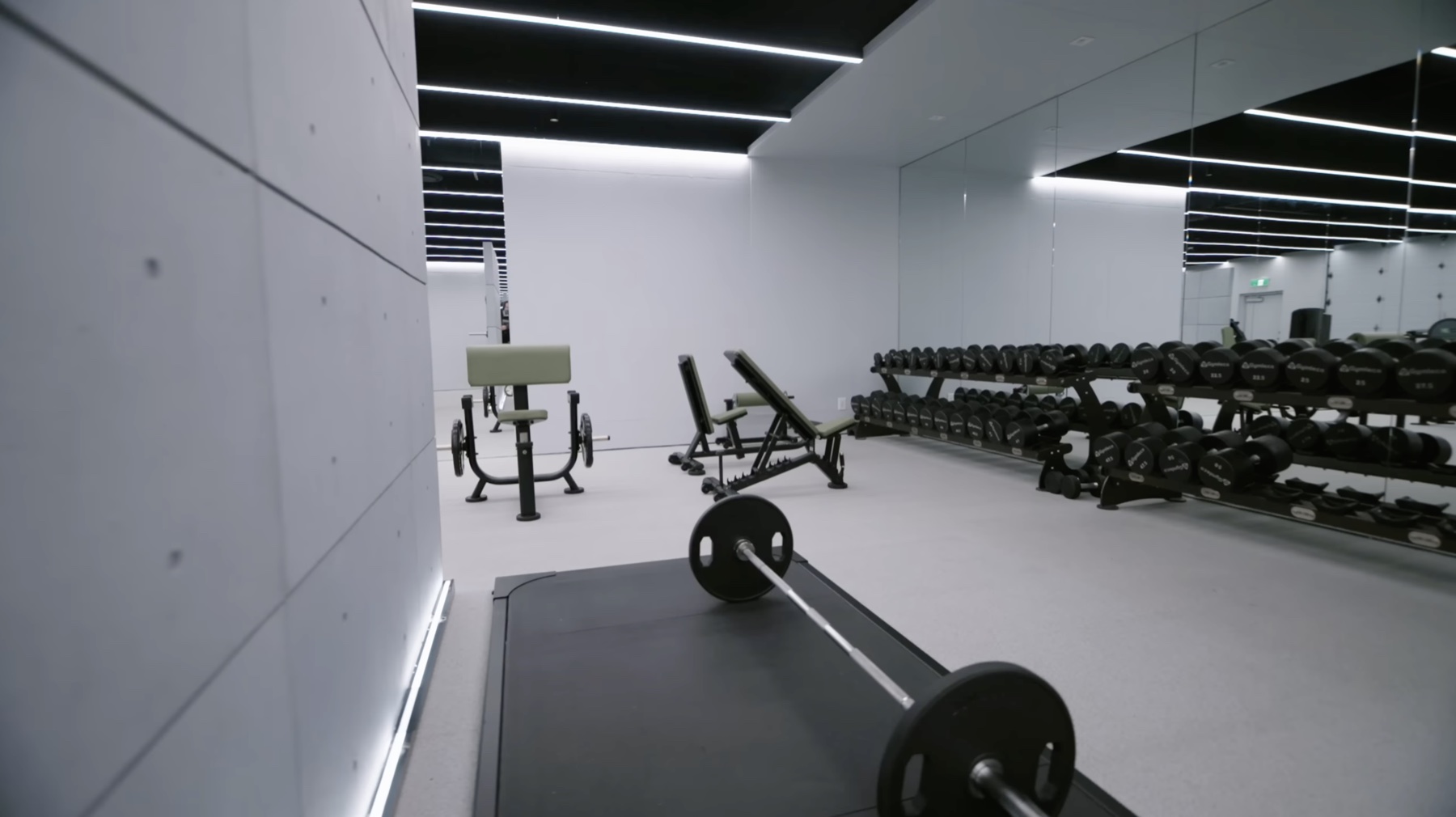
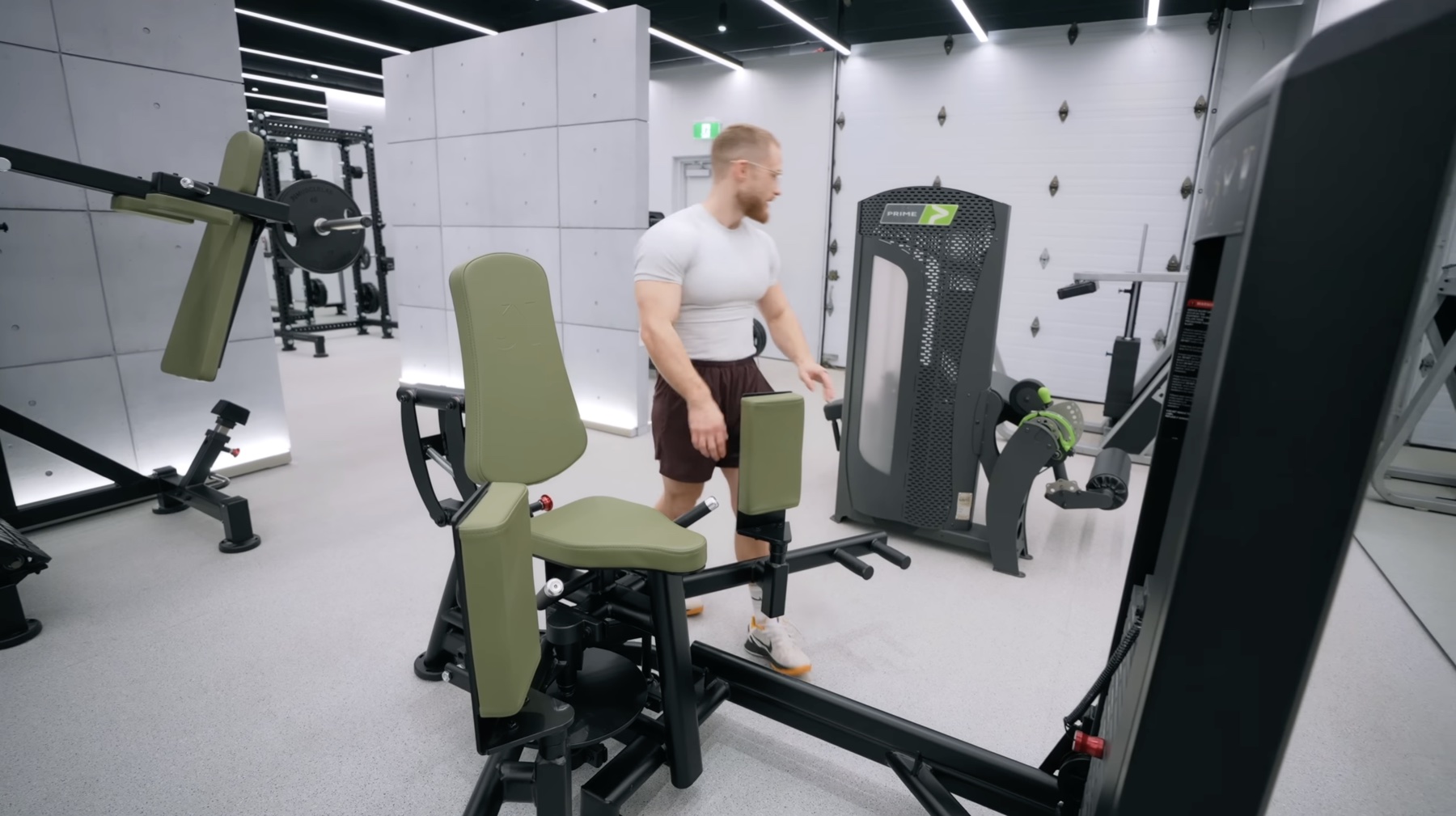
Functional, heavy, strength-biased. The bodybuilding toys live next door.
The Dark Gym
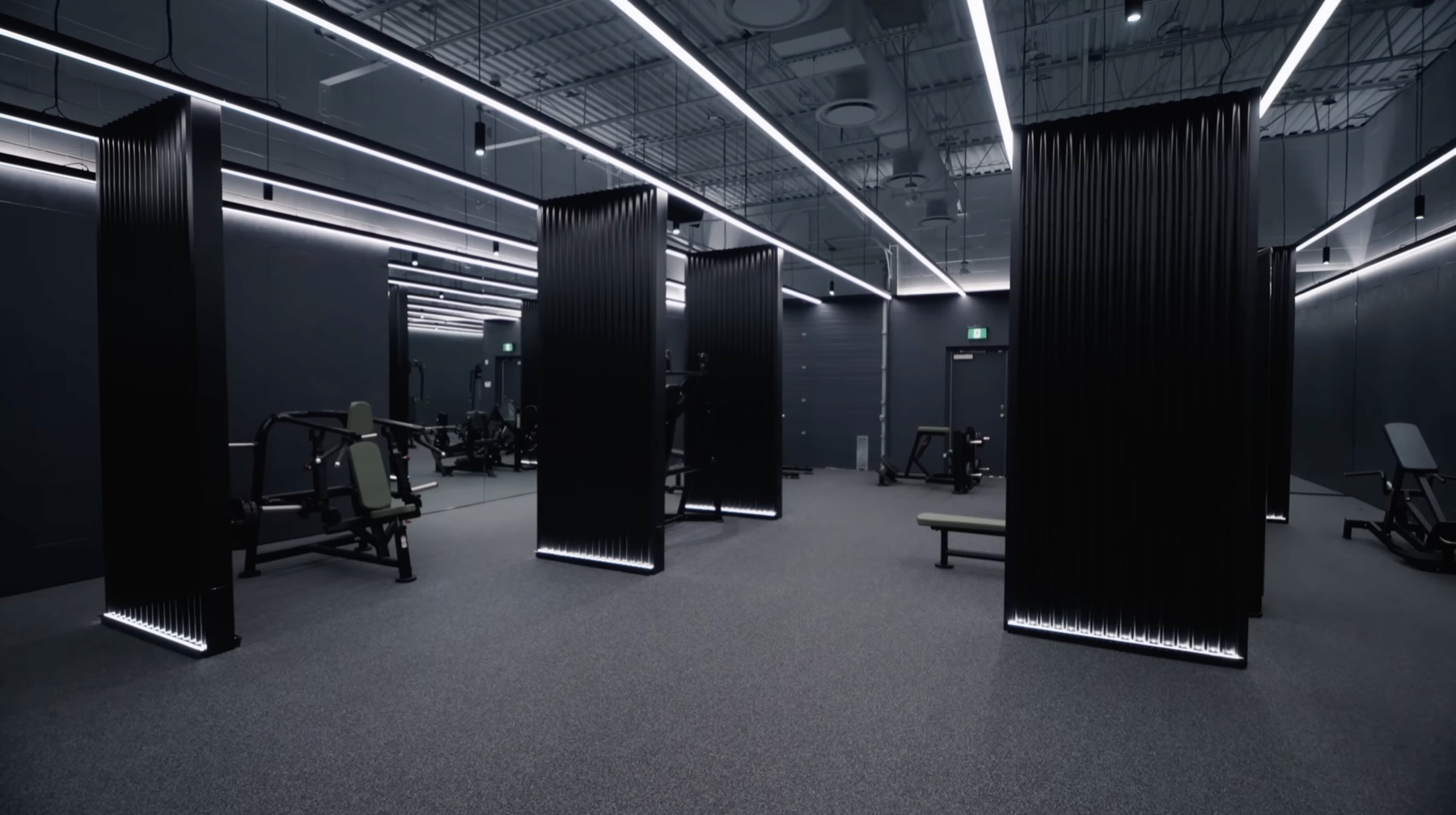
Dramatic downlighting, lower-key vibe, bodybuilding-focused. Dense collection.
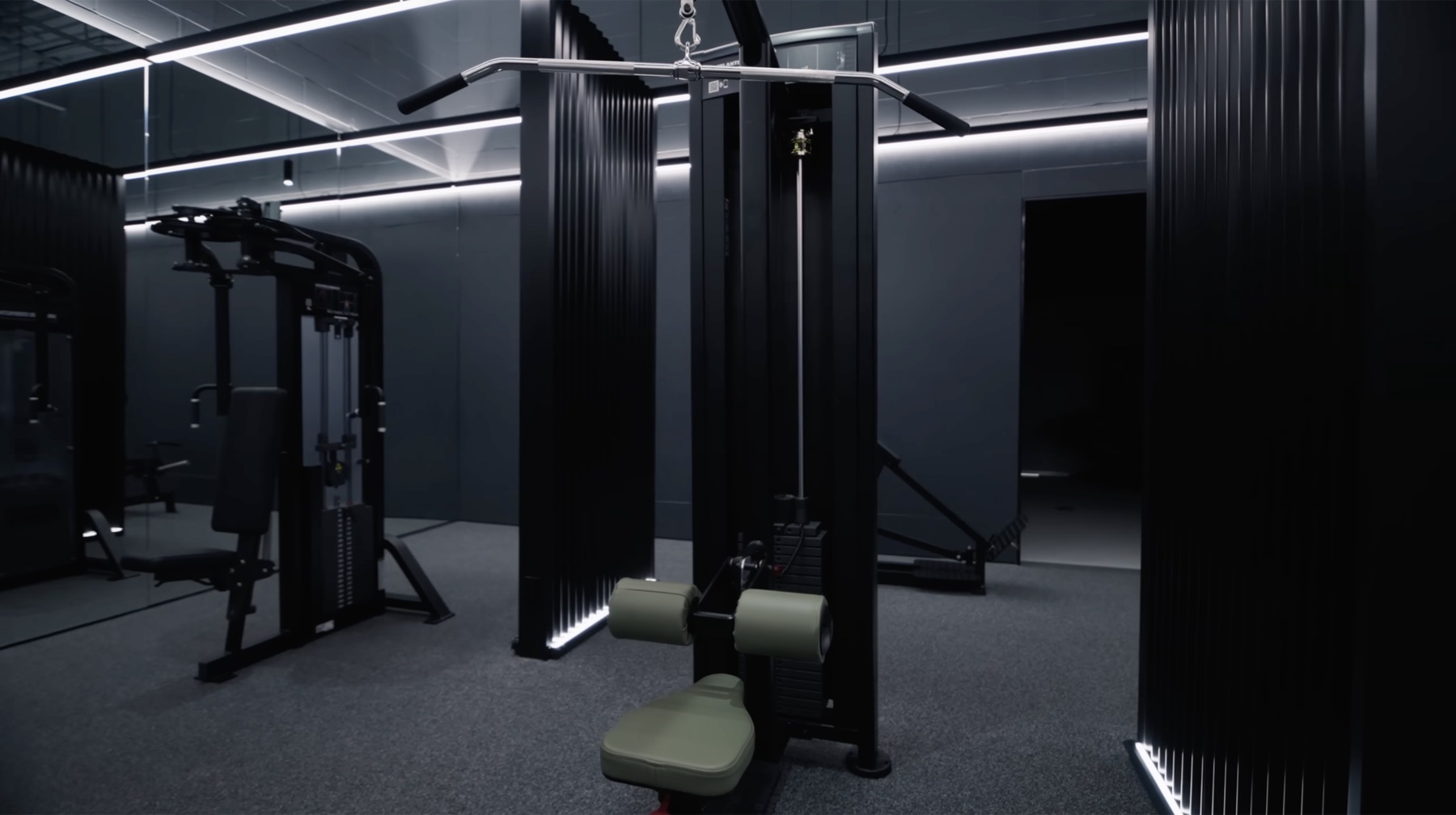
Flip every overhead off and leave the spotlights on, and it looks like I just lost 5% body fat. The lighting is, evidently, a weapon.
This room is also rigged with individual dimmers on every fixture. A control panel flips all overheads off and leaves every spot as its own instrument. Nippard's dry punchline: flip to spotlight-only and it looks like he just lost 5% body fat.
The Podcast Room
Understated in the tour — the Jeff Nippard podcast launched here with his brother Brad. It's a working room, not a showcase one. Worth noting, but not the reason anyone is here.
The Lab
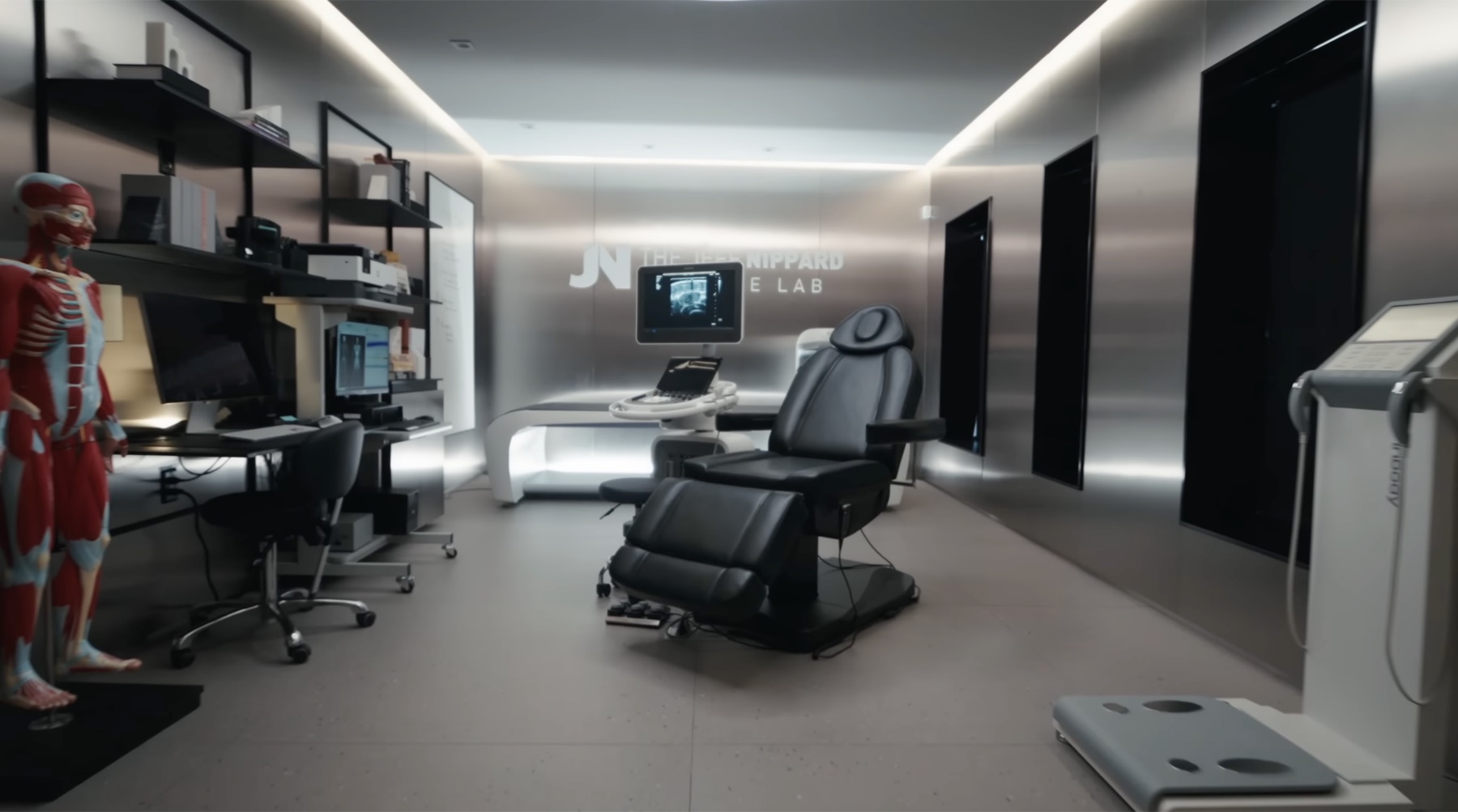
The actual point of the building. Three hundred thousand dollars behind one door.
The ambition is explicit: peer-reviewed, journal-published studies. Not influencer content dressed up as science.
Some of the experiments Nippard has floated — a junk-food twin vs. clean-food twin trial; an enhanced bodybuilder coming off cycle with identical training and nutrition to measure muscle loss; large-sample studies that address the chronic small-n problem that plagues real exercise science. Plus the thing no university-funded study has ever allowed: actually filming the subjects going through the protocol.
How it's funded: entirely through his own programs at jeffnippard.com and the MacroFactor nutrition app he co-owns. Self-funding a research facility at this scale is the genuinely unusual part.
What's Actually Worth Stealing
Most of this build isn't replicable. A $200,000 DEXA is not a home-gym accessory. But the underlying principles scale down cleanly.
- 1Split your training space by function, not aesthetics. Strength work and bodybuilding work have different spatial needs. Even in a garage, separating them mentally changes how you train.
- 2On machines with adjustable cams or loadable points, learn what each position does. Most people load weights where the pegs are and never question it. Moving plate position on a leg extension or row changes which part of the range you're actually training.
- 3Modify the reverse peck deck by sitting sideways. Full range of motion instead of half reps. Free upgrade.
- 4Use the 45° back extension as a glute exercise. Round the back, hold a plate, high reps. Don't bother with the spinal-erector version.
- 5Lighting matters more than you'd think. Not for results — for perception. A space that feels serious makes you train serious. Adjustable lighting is a sub-$200 upgrade with outsized return.
The Throughline
The deeper takeaway is philosophical. Most of the bodybuilding and wellness world runs on vibes, legacy protocols, and whatever the most charismatic voice said last. The argument underneath this building is that the field could be better than that — that someone with enough audience, enough equipment, and enough rigor can actually move the research forward.
Whether it works is the experiment itself.
Original video
Jeff Nippard's Muscle Lab, light gym, dark gym, podcast room, and lab tour
The source tour is embedded here for context; original credit and the YouTube page are linked below.
Compound commentary and curation. Original video, facility tour, and source imagery by Jeff Nippard.
More Builds:
All Builds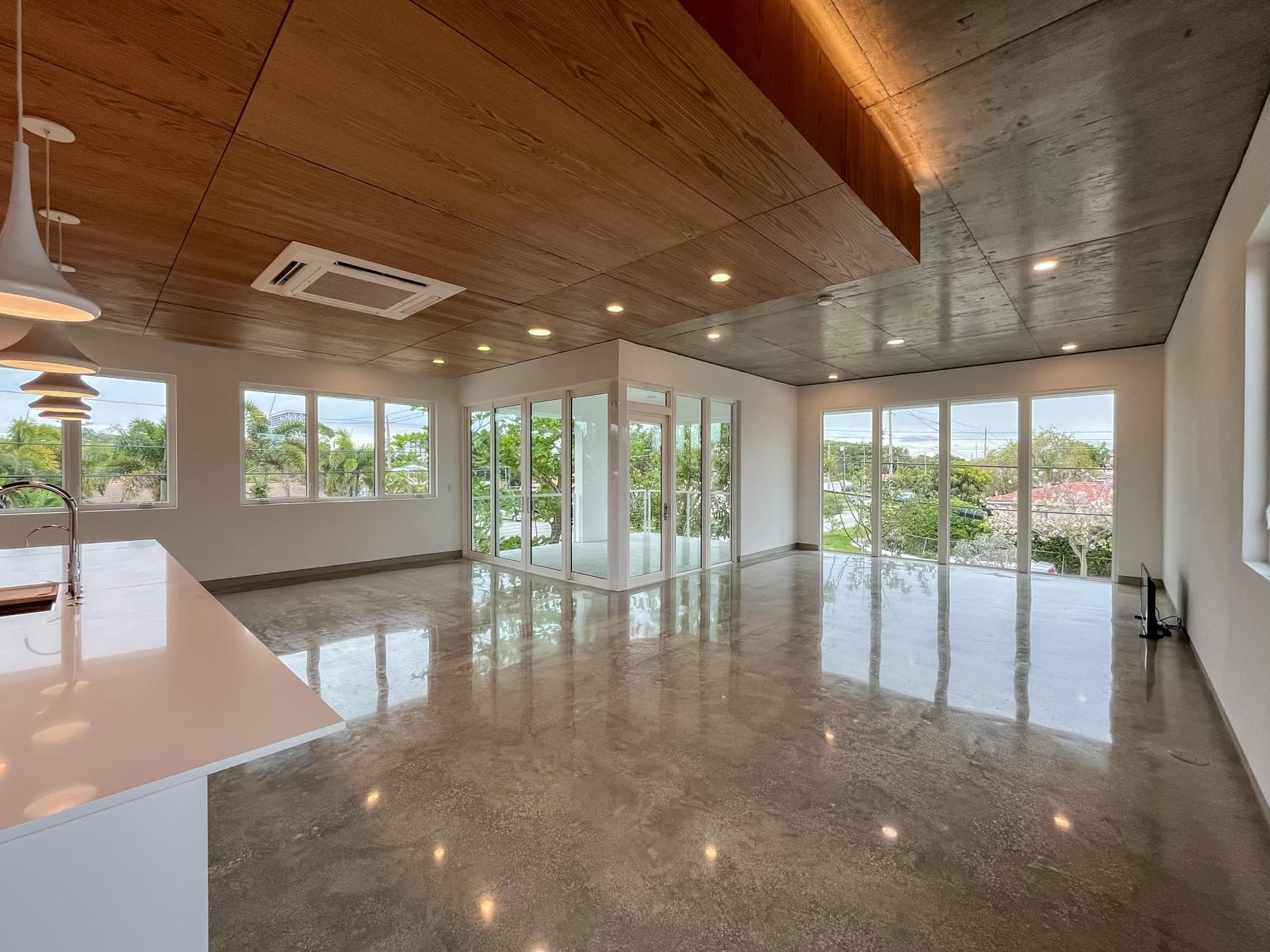
The Miami Home That Became the World's First WELL Residence
The first house on earth certified under WELL's residential standard — built in Miami with no drywall, no AC ducts, and every pipe reachable behind removable formaldehyde-free oak panels, on columns ten feet above a flood-prone city.
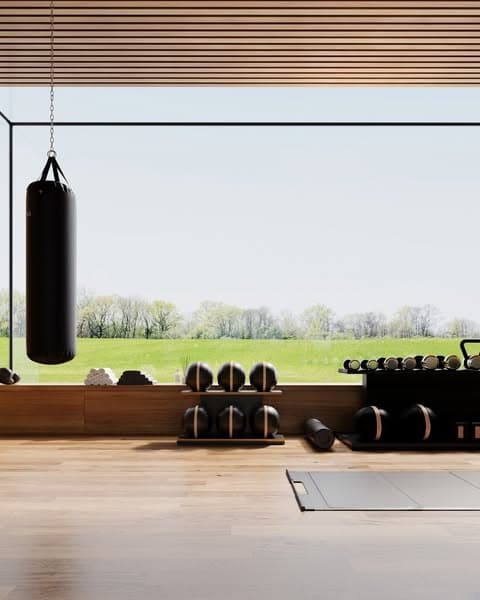
A Modern English Countryside Gym
A luxe home gym at a modern estate in the English countryside, designed by Sportova — warm oak slats wrapping the walls and ceiling, a full wall of glass onto rolling green, and sculptural weights and yoga equipment by PENT.
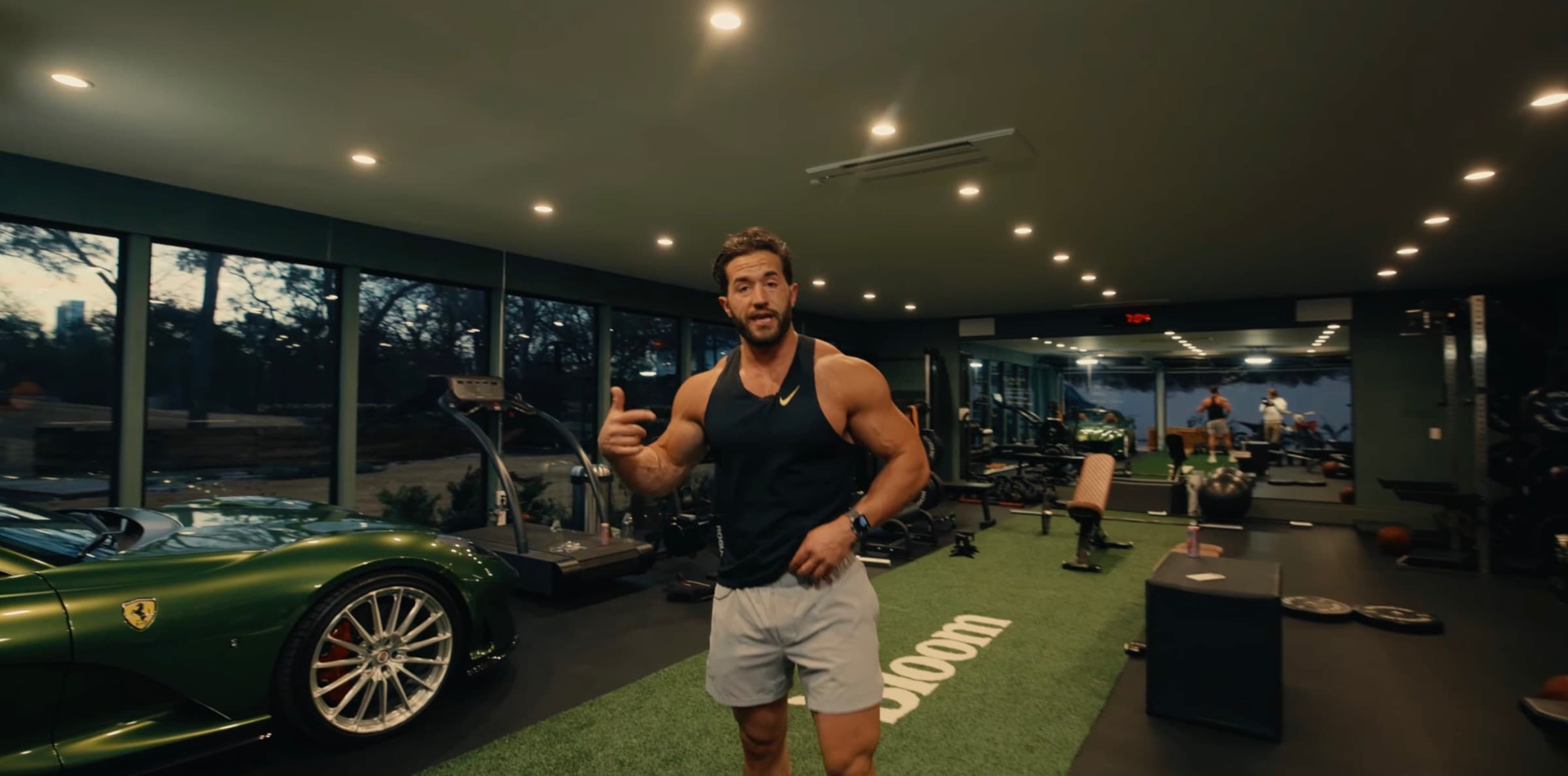
Greg LaVecchia's Custom Gym and Training Property in Austin
A custom green-and-leather home gym from the founder of Bloom Nutrition, backed by a wood-burning backyard sauna, a cold plunge, a recovery room with red light and hyperbaric oxygen, and three central Austin lots stitched into a private park.